Counterfeit Bills Are Circulating in Michigan. Here Is What to Look For.
People Driven Credit Union’s cash courier has alerted us to an increase in counterfeit bills circulating in Michigan. The bills in question are predominantly older-looking $100 bills that can be difficult to spot without knowing what to look for. We want to make sure every member and business owner in our community has the information they need to identify a fake bill before it costs them money.
A Message From Our Cash Courier
Over the past 24 hours, there has been a noticeable increase in counterfeit bills. Specifically, these have predominantly been older-looking $100 bills. Please share this information with family, friends, and any business owners you may know to collectively reduce the circulation of counterfeit bills and mitigate revenue loss.
All genuine bills, regardless of denomination, should feature ridges on the lapel or jacket of the person depicted in the center of the bill. By running your fingernail down the jacket, you should be able to feel these ridges. Use UV lights to check for the fibers and watermarks present in valid bills. A blurry or smudged bill is not authentic. Real money will not exhibit these characteristics. If a bill appears fuzzy, it may have been washed, a process where a smaller denomination is bleached and reprinted as a higher value. Avoid relying solely on counterfeit detection pens as they can be easily deceived. A loss of definition, such as the lines in the hair or the shadowing around the face, is a strong indicator of a counterfeit bill.
Examples of Counterfeit Bills Found in Michigan
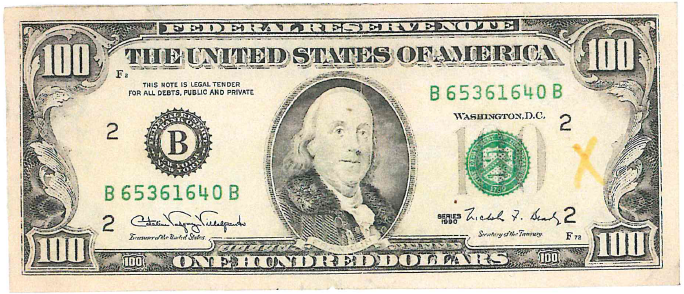
A blurry or smudged bill is not authentic. Real money will not exhibit these characteristics.
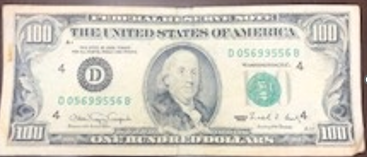
If a bill appears fuzzy it may have been washed, a process where a smaller denomination is bleached and reprinted as a higher value.
How to Identify a Counterfeit Bill
1. Feel the Ridges
All genuine U.S. currency features raised ridges on the lapel or jacket of the portrait in the center of the bill. Run your fingernail across the jacket. On a real bill you will feel distinct ridges. A counterfeit bill will feel flat and smooth in the same area.
2. Use a UV Light
Genuine U.S. bills contain embedded security fibers and watermarks that are visible under ultraviolet light. A counterfeit bill will not reproduce these features accurately. If you handle cash regularly, a UV light pen or portable UV lamp is a worthwhile investment.
3. Check for Blurriness
Real currency is printed with high-precision intaglio printing that produces sharp, clear images. If a bill looks blurry, smudged, or lacks definition in the portrait, text, or fine lines, it is likely a counterfeit. Pay close attention to the lines in the hair and the shadowing around the face on the portrait.
4. Look for the Watermark and Security Strip
Hold the bill up to a light source. Genuine $100 bills contain an embedded security strip that reads USA 100 and a watermark portrait of Benjamin Franklin visible from both sides of the bill. If either feature is missing or looks printed rather than embedded, the bill is fake.
5. Do Not Rely on Counterfeit Detection Pens Alone
Counterfeit detection pens test for starch in the paper. Washed bills, where a smaller denomination is bleached and reprinted as a higher value, use genuine currency paper and will pass the pen test. The pen is a useful first check but it is not sufficient on its own. Use it alongside the other methods listed above.
What to Do If You Find a Counterfeit Bill
If you receive or discover a bill you believe is counterfeit, do not return it to the person who gave it to you. Do not spend it. Handle it as little as possible and place it in an envelope or plastic bag to preserve any fingerprints.
Then take these steps:
Step 1: Note the description of the person who gave you the bill and any vehicle they were using if applicable.
Step 2: Contact your local law enforcement and surrender the bill to the officer. Do not attempt to use it or pass it along.
Step 3: Contact People Driven Credit Union at (248) 263-4100 or visit any of our five Michigan branch locations so we can note the incident and assist you.
You can also report counterfeit currency directly to the U.S. Secret Service at secretservice.gov or to your nearest Secret Service field office.
Share This Information
If you know business owners, cashiers, or anyone who handles cash regularly, please share this page with them. The more people who know what to look for, the harder it becomes for counterfeit bills to circulate in our community.

John Scharff is the Digital Marketing Lead at People Driven Credit Union, where he helps create clear, practical financial content for members and the communities PDCU serves. He focuses on making financial topics easier to understand, from loans and savings accounts to digital banking, fraud prevention, and everyday money management.
View More Posts