The holiday travel season has a funny way of turning responsible adults into phone-zombie survivalists. You’re sprinting through an airport, your boarding pass is on your screen, your battery is at 4%, and suddenly that free charging kiosk feels like a gift from the universe.
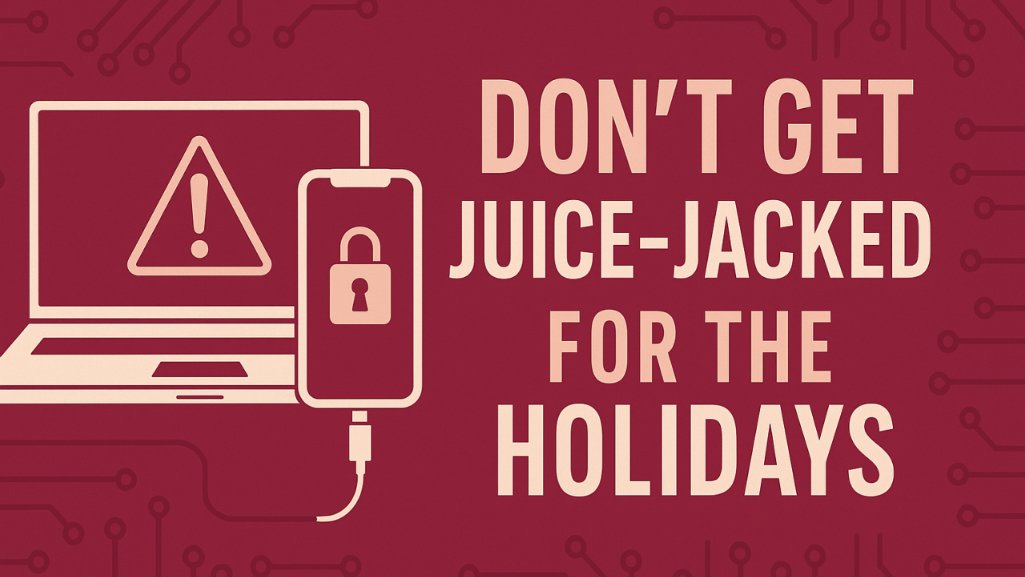
But before you plug in, there’s a modern risk worth knowing about: “juice jacked.” It’s a broad term for threats that involve compromised USB charging ports, cables, or chargers that can potentially attempt to access data or introduce malware when you connect your device. While the everyday risk appears low and many warnings remain precautionary, security agencies and experts still recommend avoiding unknown public USB ports because the downside is big and the prevention is easy.
What Is “Juice-Jacked”?
Most of us think of a charger as a simple block of plastic and wires. But USB connections can carry data as well as power. That means a malicious charging port, cable, or off-brand device could be modified to try to:
- Prompt or trick a device into enabling data access
- Install or deliver malware in targeted scenarios
- Capture sensitive information if a user accepts suspicious prompts
Even if widespread real-world cases are hard to confirm, the risk model is simple: when you don’t control the port or the cable, you don’t control what it’s capable of attempting.
Holiday Shopping Risk: Cheap and Off-Brand Chargers
The holidays also bring a different flavor of danger: the “too good to be true” charger deal. Unfamiliar brands and questionable marketplace listings may expose you to two issues:
- Safety problems. Counterfeit or poorly made chargers can overheat and pose shock or fire risks.
- Security concerns. Malicious or modified cables and accessories exist, especially in higher-risk or targeted contexts. The average shopper isn’t likely to encounter a spy cable, but it’s another reason to stick with reputable sellers.
If the packaging looks suspicious, the reviews seem manufactured, or the price is wildly below normal, that “steal” might be trying to steal back.
Where You’re Most at Risk
During the holiday rush, be extra cautious around:
- Airport and train station charging kiosks
- Free USB ports in hotels, conference spaces, and bars
- Public charging stations in malls and venues
- Unknown-brand chargers left in rental cars
- “Found” chargers that someone conveniently left behind
How to Protect Yourself (Without Becoming a Cyber Expert)
You don’t need a degree in computer science to stay safer. Just follow a few simple habits:
- Carry your own charger and cable. Old-school wins here. Your own wall charger is still the safest bet because you control the hardware.
- Use an AC outlet instead of a USB port. If you need airport or hotel power, plug your own adapter into the wall.
- Consider a USB “data blocker.” These adapters are designed to allow power while blocking data pins, which can add a helpful layer of protection when you’re traveling.
- Buy from reputable brands and retailers. A small savings isn’t worth the safety or security gamble.
- Keep your phone locked while charging. Good device hygiene always helps reduce risk.
The Bigger Message
A compromised charger is the kind of low-effort, high-impact threat criminals love: it’s opportunistic, it blends into everyday life, and it preys on distraction. Whether the risk is rare or merely underreported, the fix is simple and cheap: bring your own power.
Bottom line: If an update, prompt, or accessory feels off, trust your gut and don’t tap “Allow” just because your battery is low.
If you ever have questions about suspicious transactions or protecting your accounts, People Driven Credit Union is here to help. Visit our Security Center or our Contact Us page to reach our team.
Stay vigilant. Protect your financial future.
People Driven Credit Union is committed to helping our members recognize and avoid scams. Learn how to safeguard your identity and report fraud before it causes lasting damage.

John Scharff is the Digital Marketing Lead at People Driven Credit Union, where he helps create clear, practical financial content for members and the communities PDCU serves. He focuses on making financial topics easier to understand, from loans and savings accounts to digital banking, fraud prevention, and everyday money management.
View More Posts