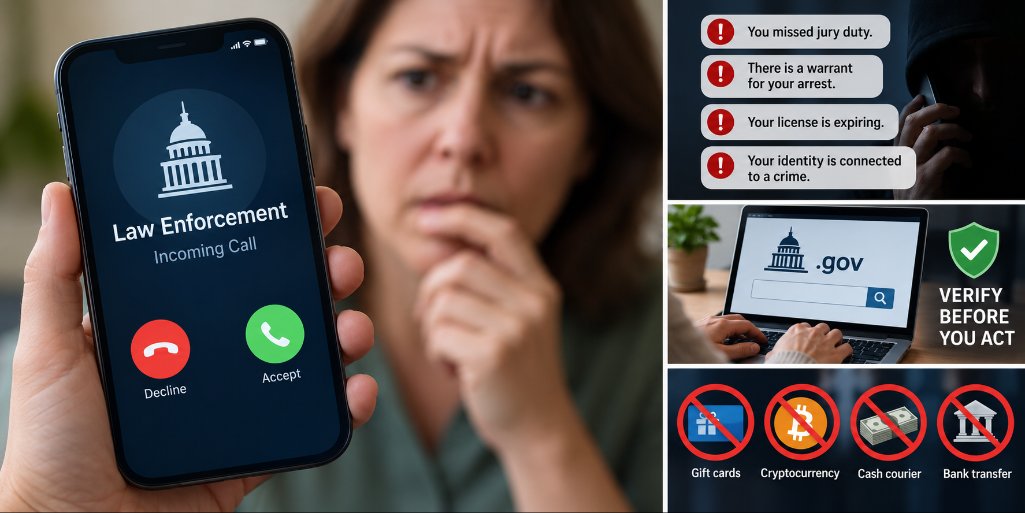
A phone call appears to come from a government agency. The caller knows your name. They may even provide a badge number, case number, or other information that sounds official.
Then comes the threat.
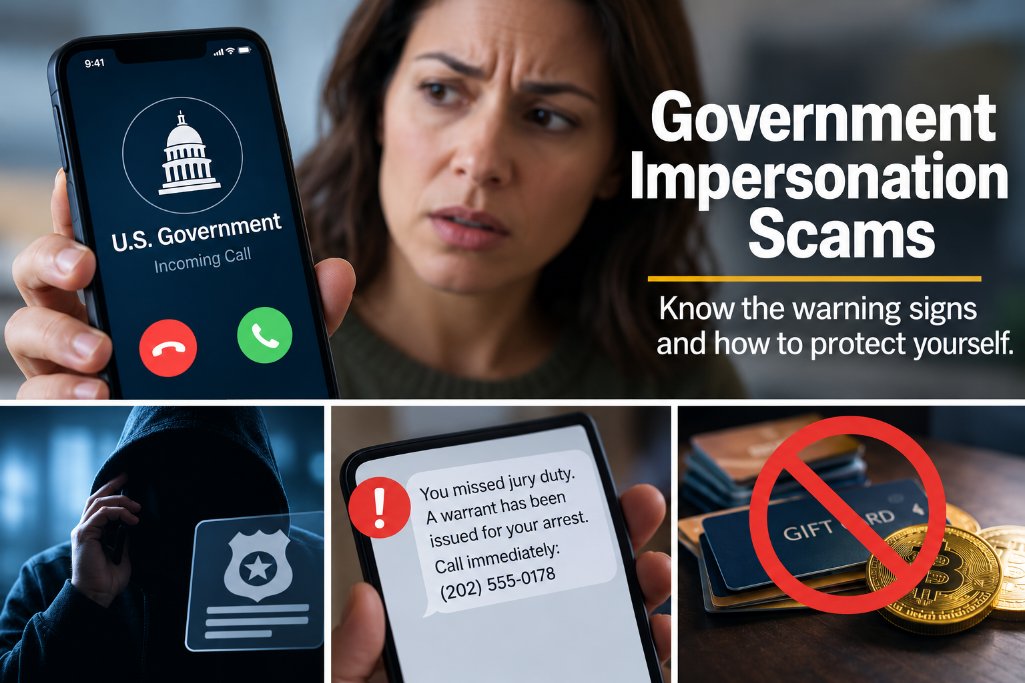
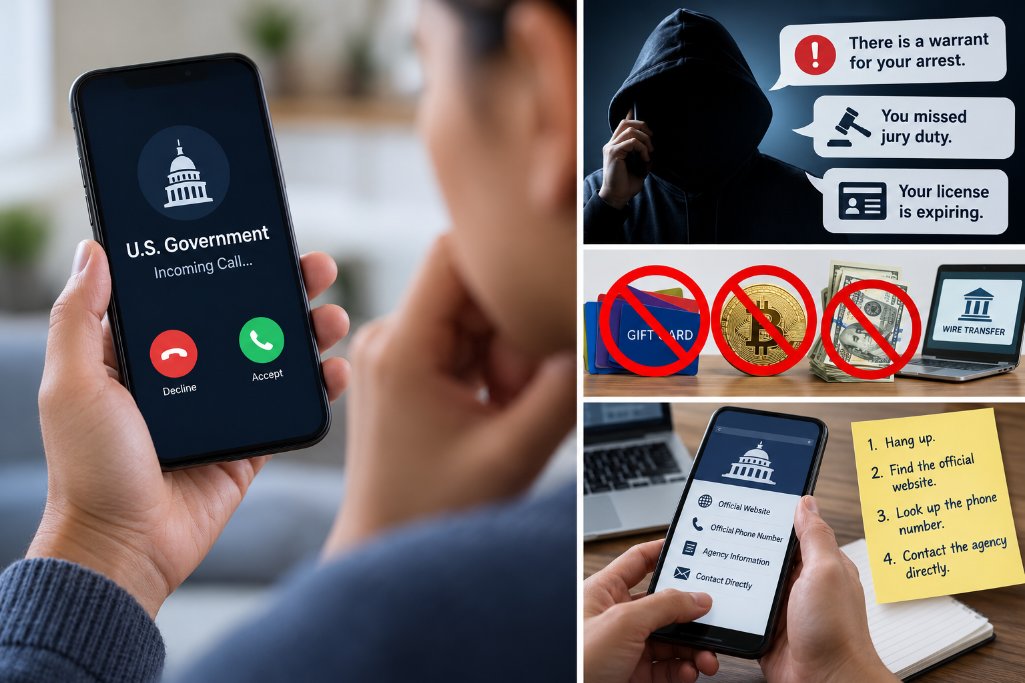
You owe a fine. You missed jury duty. There is a warrant for your arrest. Your license is about to be suspended. Your identity has been connected to a crime.
And unless you pay immediately, something bad will happen.
The FBI is warning consumers about widespread government impersonation scams in which criminals pretend to be law enforcement officers or government officials to steal money or personal information.
According to the FBI’s Internet Crime Complaint Center, or IC3, nearly 61,000 government and law enforcement impersonation complaints were reported between January 2025 and July 2026. Reported losses exceeded $1.6 billion.
Understanding how these scams work can help you recognize the warning signs before you send money or provide sensitive information.
How government impersonation scams work
Scammers most commonly contact victims by phone, although they may also use text messages and email.
The caller may claim to represent organizations such as:
- The FBI
- A local police department or sheriff’s office
- A courthouse
- Another federal or state government agency
- A foreign law enforcement agency or embassy
Scammers can make the contact look convincing. They may spoof legitimate government phone numbers, use the names of real employees, create fake credentials, or send messages that appear to come from an official email address.
The FBI also warns that some scammers are using artificial intelligence to create convincing video calls in which someone appears to be a government or law enforcement official.
Common threats scammers use
Government impersonation scams often rely on fear and urgency. The goal is to make you act before you have time to question whether the situation is legitimate.
You are connected to a crime
The caller may say your Social Security number, bank account, vehicle, or identity has been connected to criminal activity. They may threaten arrest or prosecution unless you send money or cooperate with their supposed investigation.
You missed jury duty
A caller may claim you failed to appear for jury duty or missed a court date and now have an outstanding warrant.
The FBI received 6,833 complaints involving these types of scams between January 2025 and July 2026, with reported losses approaching $36 million.
Your license or identification is expiring
Scammers may claim your driver’s license, passport, professional license, or another government-issued credential needs to be renewed immediately.
Some criminals specifically target professionals, including medical practitioners, by claiming their professional licenses are expiring or have been connected to criminal activity.
You could face arrest or other serious consequences
Scammers often try to keep victims frightened and isolated. They may tell you not to hang up, not to contact your financial institution, and not to discuss the situation with family members, friends, police, or anyone else.
That secrecy is a major warning sign.
Government agencies do not demand payment this way
According to the FBI, law enforcement and government authorities will not call or text you demanding payment or requesting personal or sensitive information.
They will not require payment through:
- Gift cards or prepaid cards
- Cryptocurrency
- Cryptocurrency ATMs or kiosks
- Cash delivered by courier
Scammers may also request a bank wire or another difficult-to-reverse form of payment.
If someone claiming to represent the government tells you that you must pay immediately to avoid arrest, prosecution, license suspension, or another punishment, stop communicating with them.
How to verify a government caller
Do not rely on the phone number, email address, website, or other contact information the caller provides.
Instead:
- Hang up.
- Find the agency’s official website yourself.
- Look up the agency’s published phone number.
- Contact the agency directly and ask whether someone there was attempting to reach you.
Do not simply call back the number displayed on your caller ID. Scammers can manipulate caller ID information to make a call appear to come from a legitimate agency.
Be careful with website links
Scammers may send links to websites designed to resemble legitimate government websites.
Before entering any personal information, examine the web address carefully.
A fake site could differ from the real site by only one letter or use an incorrect domain ending. For example, a scammer might create a “.com” website designed to resemble an agency whose real website uses “.gov.”
Instead of clicking a link someone sends you, consider navigating directly to the agency’s official website.
Protect your personal information
Never provide sensitive information simply because someone contacting you sounds authoritative.
Be especially cautious about providing:
- Social Security numbers
- Online banking usernames or passwords
- Account numbers
- Debit or credit card information
- Verification codes
- Personal identification numbers, or PINs
A caller creating a sense of urgency does not make the request legitimate.
Take a few minutes to verify who you are speaking with before providing information or sending money.
What to do if you think you’ve been scammed
If you believe you sent money or financial information to a government impersonation scammer, stop communicating with the person immediately.
Contact your financial institution as soon as possible. Depending on how the payment was made, there may be steps that can be taken to help protect your accounts.
You should also contact your local law enforcement agency and report the incident to the FBI’s Internet Crime Complaint Center at IC3.gov.
Keep copies of any information connected to the scam, including:
- Phone numbers
- Email addresses
- Text messages
- Emails
- Payment instructions
- Bank account information
- Cryptocurrency addresses
- Transaction records
- Screenshots or other communications
The FBI recommends retaining financial records and communications because those details may help investigators.
Slow down when someone demands immediate action
Government impersonation scams work because criminals try to prevent you from having time to think.
A legitimate government agency will not require you to immediately purchase gift cards, send cryptocurrency, deliver cash, or transfer money to avoid arrest.
If something feels unusual, end the conversation and independently verify the request.
And if someone tells you not to contact your financial institution, that is a good reason to contact your financial institution.
People Driven Credit Union is here to help members protect their accounts. If you believe you provided account information or sent money because of a scam, contact PDCU as soon as possible so we can help you review the situation and determine what steps you should take next.
Frequently asked questions about government impersonation scams
Be suspicious if the caller threatens arrest, demands immediate payment, asks for gift cards or cryptocurrency, requests sensitive account information, or tells you not to speak with your financial institution or family members. Hang up and independently contact the agency using the phone number listed on its official website.
Yes. Scammers can spoof caller ID information so a call appears to come from a legitimate government agency, police department, courthouse, or other trusted organization. Do not rely on caller ID alone to verify who is calling.
No. According to the FBI, law enforcement and government authorities will not call or text you demanding payment or requesting sensitive personal information. They will not require payment through gift cards, cryptocurrency, cryptocurrency kiosks, or cash couriers.
Do not send money or provide personal information. Hang up and contact the court or law enforcement agency directly using contact information from an official government website. Do not use a phone number or link provided by the caller.
Stop communicating with the scammer and contact your financial institution as soon as possible. You should also contact local law enforcement and report the incident to the FBI’s Internet Crime Complaint Center at IC3.gov. Save messages, phone numbers, payment records, screenshots, and other information related to the scam.
Government impersonation scam Source: FBI Internet Crime Complaint Center, “Scammers Impersonating Law Enforcement and Government Officials in Fraud Schemes,” September 17, 2026.

John Scharff is the Digital Marketing Lead at People Driven Credit Union, where he helps create clear, practical financial content for members and the communities PDCU serves. He focuses on making financial topics easier to understand, from loans and savings accounts to digital banking, fraud prevention, and everyday money management.
View More Posts