A steep discount on a popular gift. A text about a missed delivery. A donation request that asks you to give right away. Holiday scams often look like messages you expect to receive this time of year.
People Driven Credit Union wants to help you protect your money and personal information. Here are five common holiday scams, how to spot them, and what to do if you’ve already paid or shared information.
5 common holiday scams
1. Fake shopping deals and online stores

A social media ad offers a popular gift at a fraction of its usual price. The link takes you to a store that looks convincing, but the seller may take your money without sending the item or use the checkout page to steal your payment information.
What to do: Go directly to the retailer’s website or app and look for the deal there. If you’ve never heard of the seller, search its name along with “scam” or “complaint” before you buy.
2. Fake package delivery texts and emails
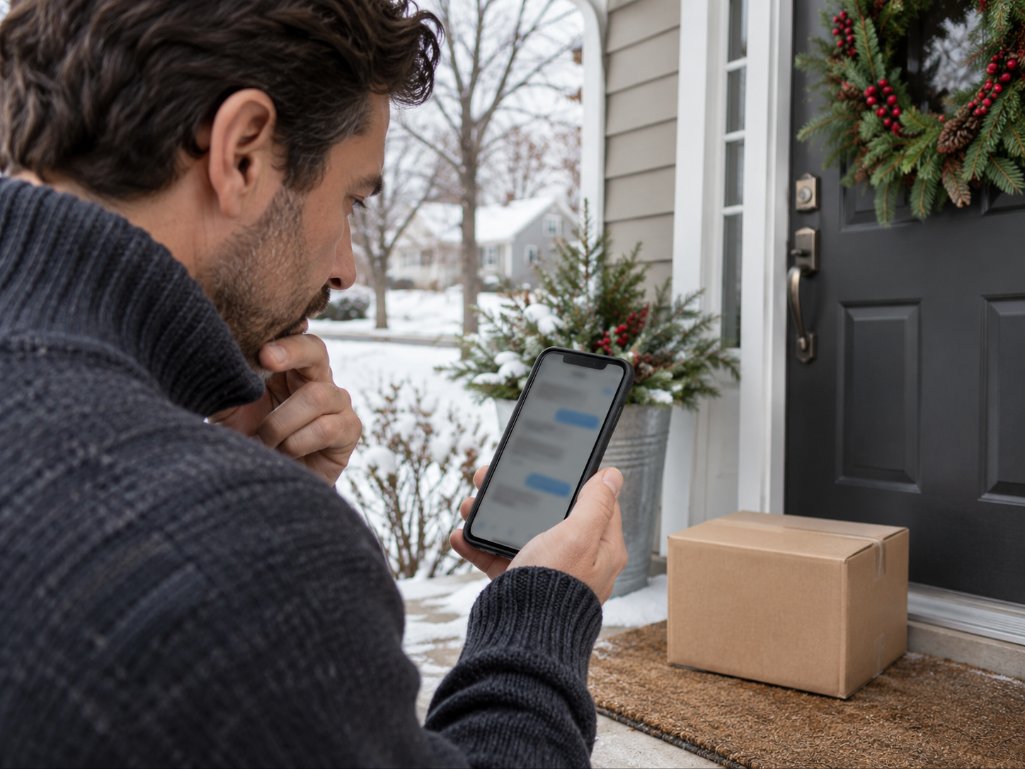
A message says your package is on hold, your address is incomplete, or you need to pay to reschedule delivery. The link may lead to a fake tracking page that asks for your address or card details.
What to do: Open your order history or visit the shipping company’s official website or app to check the delivery. Use the tracking number from your original order confirmation.
3. Fake charities and donation requests

Scammers may use a name that sounds like a familiar charity or claim to be raising money for local families. They may pressure you to donate before you have time to look up the organization.
What to do: Look up the charity independently and donate through its official website. If a request comes through social media, verify who organized the fundraiser and who will receive the money.
4. Gift card payment scams
Someone says you owe a bill, need to claim a prize, or have to help a relative in an emergency. They tell you to buy gift cards and send the card numbers or PINs. Once they have those details, they can spend the balance even if you still have the cards.
What to do: Refuse requests to pay a bill, claim a prize, or resolve an emergency with gift cards. If someone claims a loved one needs help, call that person directly using a number you already know.
5. Phishing emails, calls, and texts
A message that looks like it came from your credit union or a retailer says there’s a problem with your account. The sender may ask you to verify your password, PIN, or a one-time security code. A caller can even make the number on your caller ID look familiar.
What to do: Keep passwords, PINs, and verification codes private. If you get an unexpected request, end the call or close the message. Open the official app or call the number on the organization’s website or the back of your card.
Protect your accounts while you shop
- Review your recent transactions in online banking or the MyPDCU app and report any you don’t recognize.
- Turn on account alerts so you can spot unfamiliar activity sooner.
- Use a strong, unique password for each account and enable multifactor authentication where available.
- If you’re shopping away from home, use your mobile data connection when entering payment information.
What to do if you think you’ve been scammed
- If you see an unfamiliar PDCU transaction or think someone has access to your account: Call 844-700-7328 right away. You can report account fraud 24/7.
- If you shared a password: Change it through the company’s official website or app. Change it anywhere else you used the same password.
- If you shared a gift card number or PIN: Contact the gift card issuer right away and keep the card and receipt.
- If you’re unsure whether a message came from PDCU: Call us directly at 248-263-4100 to verify it.
Save any receipts, texts, emails, or screenshots related to the scam. You can also report the scam to the Federal Trade Commission.

John Scharff is the Digital Marketing Lead at People Driven Credit Union, where he helps create clear, practical financial content for members and the communities PDCU serves. He focuses on making financial topics easier to understand, from loans and savings accounts to digital banking, fraud prevention, and everyday money management.
View More Posts