Financing a boat can help you spread the cost of a new or used boat across manageable monthly payments. Before you start visiting dealerships or scrolling through listings, it helps to understand the full buying process and how the boat will fit into your budget.
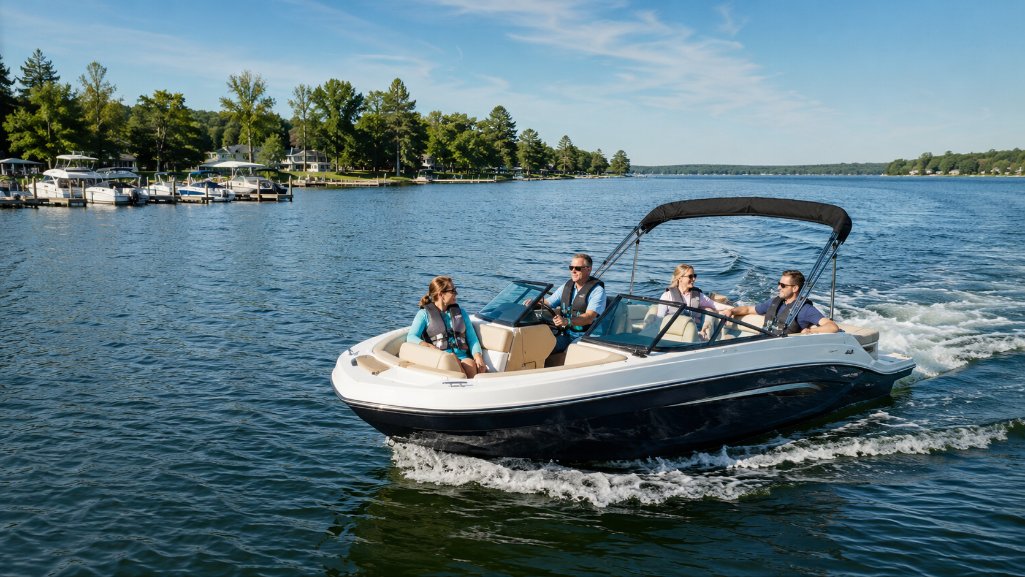
This guide walks you through boat financing in Michigan, including budgeting, loan pre-approval, inspections, insurance, documentation, closing, registration, and People Driven Credit Union membership.
1. Build a Complete Boat Budget
The purchase price is only one part of owning a boat. Before applying for boat financing, estimate both your monthly loan payment and the other costs that come with boat ownership.
Your budget may need to account for:
- Purchase price
- Down payment
- Trade-in value and any existing loan balance
- Monthly loan payment
- Boat insurance
- Registration and title costs
- Trailer and towing equipment
- Marina or docking costs
- Winter storage and winterization
- Fuel
- Routine maintenance
- Repairs
- Life jackets and other safety equipment
A larger boat can cost more to store, transport, fuel, insure, and maintain. Compare those expenses before deciding what price range works for you.
Use the PDCU boat loan calculator to estimate a monthly payment based on the purchase price, down payment, trade-in value, interest rate, and loan term.
2. Understand How Boat Financing Works
A boat loan typically uses the financed watercraft as collateral. Your available Annual Percentage Rate, commonly called APR, loan amount, and term may depend on factors such as:
- Your creditworthiness
- The amount you want to borrow
- The loan term
- The boat’s age, type, value, and condition
- Your requested loan-to-value ratio
- Any down payment or trade-in
A longer term may reduce the required monthly payment, but it can increase the total interest paid over the life of the loan. Compare the payment, total interest, and length of repayment before choosing a term.
You can review the current PDCU boat loan rates and available terms before applying.
3. Get Pre-approved Before You Shop
Boat loan pre-approval gives you an estimated borrowing range before you select a watercraft. It can help you focus your search and compare boats that fit your budget.
Pre-approval may also help you separate the purchase negotiation from the financing discussion. You can evaluate the boat’s price first, then compare available financing based on the APR, term, monthly payment, and total borrowing cost.
A pre-approval is not a guarantee that every boat will qualify. Final approval can depend on the selected watercraft, its value and condition, the requested loan amount, and any additional documentation required.
4. Compare New and Used Boats
New and used boats can create different financing and ownership considerations.
Buying a New Boat
A new boat may include updated technology, fewer immediate maintenance concerns, and manufacturer warranty coverage. However, it will usually carry a higher purchase price and may depreciate more during the first few years.
Buying a Used Boat
A used boat may provide more features for your budget, but its condition matters. Review its age, engine hours, maintenance history, storage history, title, existing liens, and anticipated repair needs.
Ask what equipment is included in the sale. A trailer, boat cover, electronics, docking equipment, and safety gear can affect the value of the overall purchase.
5. Shop Beyond the Monthly Payment
A low monthly payment does not automatically make one financing offer less expensive. Compare the complete offer, including:
- APR
- Amount financed
- Loan term
- Required monthly payment
- Total interest
- Total of all payments
- Down payment requirements
- Whether the rate can change
- Whether any optional products were added
Ask for a written breakdown before signing. Review the purchase agreement and loan documents closely to confirm that the price, boat information, financing terms, and optional products match what you accepted.
6. Inspect the Boat Before Buying
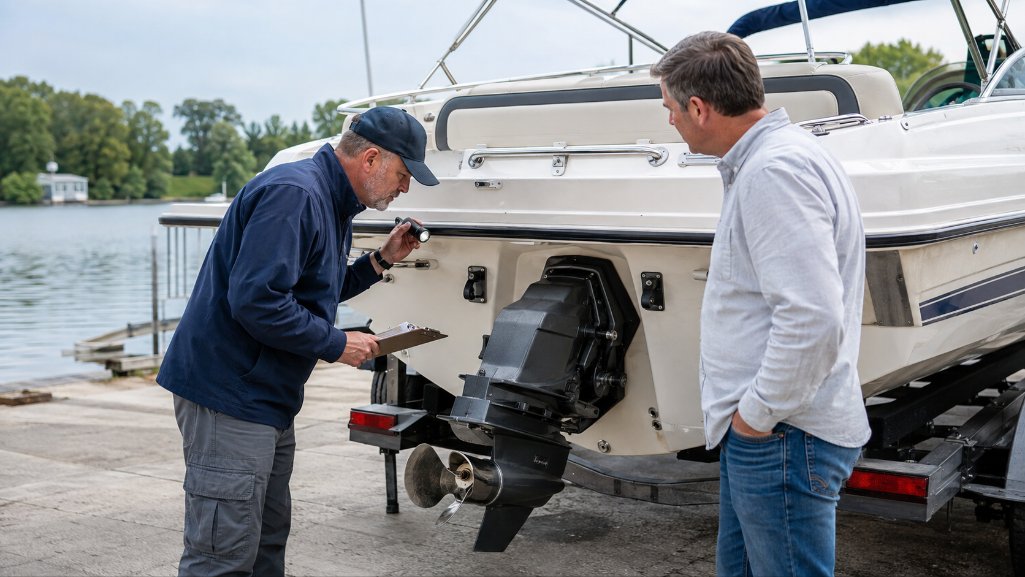
A careful inspection can uncover problems that are difficult to spot during a quick walk-through. This is especially important when buying a used boat from a private seller.
Depending on the boat, an inspection may cover:
- Hull condition
- Engine and propulsion system
- Electrical systems
- Steering and controls
- Fuel system
- Bilge pumps
- Navigation lights
- Interior and upholstery
- Trailer frame, tires, bearings, lights, and brakes
- Safety equipment
For a larger, older, or more complex boat, consider hiring an independent marine surveyor. A marine survey provides a professional review of the boat’s condition and may include an estimated market value. Ask your lender and insurance provider whether they require a survey or other inspection.
If possible, arrange a sea trial so you can see how the boat starts, steers, accelerates, shifts, and operates on the water. An inspection cannot eliminate every risk, but it can give you better information before you commit to the purchase.
7. Verify the Title and Ownership
Do not rely on the seller’s word alone when reviewing ownership. Compare the seller’s identification with the name on the title and verify that the hull identification number matches the boat.
Ask about any existing lien. A lien gives a lender or another party a legal interest in the boat. The lien generally must be addressed as part of the sale so ownership can transfer properly.
When buying from a private seller, use a written purchase agreement or bill of sale that identifies:
- The buyer and seller
- The boat’s make, model, year, and hull identification number
- Any motor or trailer included in the sale
- The agreed purchase price
- The sale date
- Any deposit or remaining balance
- Any conditions that must be completed before closing
Do not leave blank spaces in a signed ownership document. Contact the Michigan Secretary of State if you have questions about the documents needed to transfer or register a particular watercraft.
8. Arrange Boat Insurance
Your lender may require insurance before completing the loan. Even when coverage is not required by law for a particular boat, insurance can help protect you from losses involving the watercraft, equipment, liability, theft, weather, or an accident.
Coverage and exclusions vary by policy. Ask an insurance professional about:
- Agreed-value versus actual-cash-value coverage
- Liability coverage
- Collision and comprehensive coverage
- Coverage for motors, trailers, electronics, and personal property
- Towing and emergency assistance
- Navigation limits
- Storage requirements
- Layup periods
- Operator restrictions
Get an insurance estimate before buying. The boat’s type, age, value, horsepower, location, storage arrangement, and intended use can affect the available coverage and cost.

9. Gather Your Boat Financing Documents
Preparing your information can help prevent avoidable delays. Exact requirements depend on the application and the boat being financed, but you may be asked to provide:
- Government-issued identification
- Income and employment information
- Housing and contact information
- Boat make, model, year, and hull identification number
- Purchase agreement or buyer’s order
- Current title or ownership documents
- Information about an existing lien
- Trade-in information
- Marine survey or valuation, when required
- Proof of insurance
A private-party purchase may require different paperwork than a dealership purchase. Ask your PDCU loan specialist what information is needed for your specific transaction.
10. Review Everything Before Closing
Loan closing is your opportunity to confirm the final details before the funds are disbursed. Review the documents and ask questions about anything you do not understand.
Confirm the following information:
- Borrower names
- Boat description and hull identification number
- Purchase price
- Down payment and trade-in credit
- Amount financed
- APR
- Loan term
- Monthly payment
- Payment due date
- Total of payments
- Insurance requirements
- Lienholder information
Make sure you understand how the seller will be paid and what must happen before you take possession of the boat. Keep copies of the signed purchase agreement, loan documents, title paperwork, insurance information, and registration records.
11. Title and Register Your Boat in Michigan
Michigan registration and titling requirements depend on the type and size of the watercraft. According to the Michigan Secretary of State, watercraft registrations are generally issued for three years and expire on March 31 of the third year.
Michigan generally requires a title for watercraft that are at least 20 feet long or have a permanently affixed engine, regardless of length. Different rules may apply to federally documented vessels and certain watercraft that do not require registration.
Because requirements can change and individual situations differ, review the current Michigan watercraft title and registration requirements before completing the purchase.
If your purchase includes a trailer, check the title and registration requirements for the trailer separately.
12. Complete Your PDCU Membership
People Driven Credit Union serves individuals who live, work, worship, or attend school in Michigan, along with relatives of current members. You can apply for a boat loan before completing membership, but PDCU membership is required before loan disbursement.
Opening a Membership Share Savings Account establishes your ownership in the credit union. Review the PDCU membership requirements and application process to learn what information you will need.
Ready to Explore Boat Financing?
People Driven Credit Union offers boat financing for eligible new and used watercraft. You can apply online, request pre-approval, estimate your payment, or speak with a representative before choosing a boat.
Approval and available loan terms depend on your application, creditworthiness, requested loan amount, and the type, age, value, and condition of the watercraft. Membership is required before loan disbursement.

John Scharff is the Digital Marketing Lead at People Driven Credit Union, where he helps create clear, practical financial content for members and the communities PDCU serves. He focuses on making financial topics easier to understand, from loans and savings accounts to digital banking, fraud prevention, and everyday money management.
View More Posts