The best time to buy a boat in Michigan depends on what matters most to you: broad selection, possible negotiating opportunities, favorable inspection conditions, or the ability to get on the water right away.
Spring brings more shoppers and fresh inventory, while late summer and fall may bring motivated sellers. Winter offers time to plan and visit boat shows, but water testing can be difficult. Prices, incentives, and inventory vary by seller, boat type, location, and year, so the calendar should guide your search rather than dictate it.

Is There One Best Month to Buy a Boat?
There is no universal best month. A buyer looking for a specific new model may prefer winter boat shows or early spring inventory. A value-focused shopper may watch late-summer and fall listings. Someone buying a used boat may place more importance on access to a marine survey, engine inspection, and on-water test than on a seasonal discount.
Michigan’s boating season also affects the decision. Buying just before summer can provide more immediate enjoyment, but demand may be stronger. Buying near the end of the season can create more time to prepare for next year, but it may also add storage and winterization costs soon after closing.
| Season | May be best for | Potential advantages | Possible tradeoffs |
|---|---|---|---|
| Spring | Selection and immediate use | New listings, active dealers, easier inspections and water tests | Higher demand and less time to compare before boating season |
| Late summer | Balancing use and negotiation | Time remains for a water test, and some sellers may be more flexible | Popular models may already be sold |
| Fall | Buyers prepared for storage | Possible end-of-season discounts and motivated private sellers | Narrower selection plus near-term winterization and storage |
| Winter | Research, boat shows, and advance planning | More time to compare financing and possible show incentives | Limited water testing and possible storage or delivery complications |
Buying a Boat in Spring: More Choice, More Competition
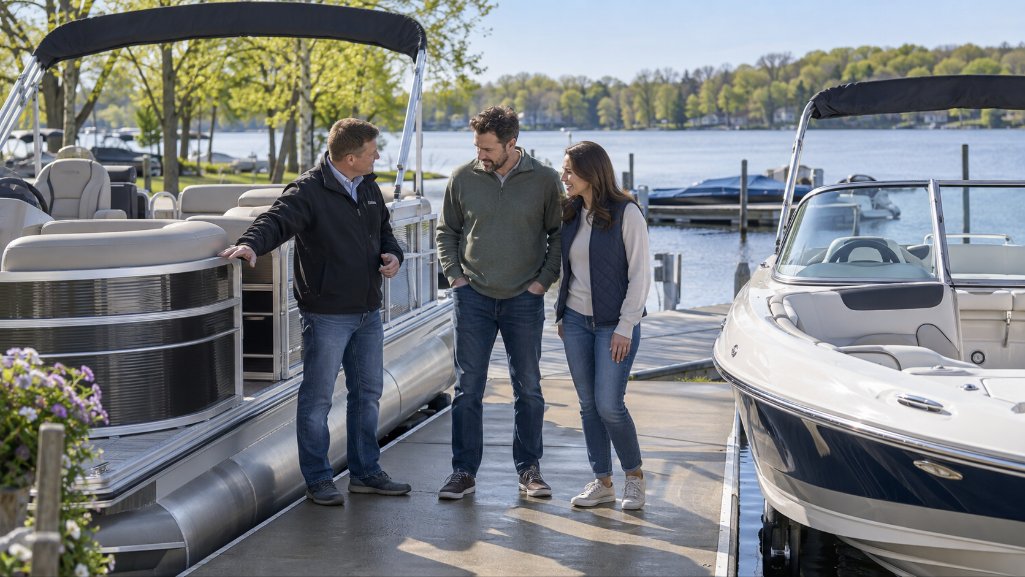
Spring is a natural starting point for Michigan buyers. Dealers prepare inventory for the season, private owners list boats they no longer plan to use, and marinas return to active schedules. Buyers can often examine a boat after it has been uncovered or launched, arrange an inspection, and complete a water test before committing.
The tradeoff is demand. More buyers may be shopping for popular pontoons, fishing boats, and family runabouts at the same time. A well-priced boat can attract attention quickly, and a seller may have less reason to negotiate. Service shops and marine inspectors may also become busier as launch season approaches.
Spring may be the best time to buy a boat if your top priorities are current inventory, a thorough on-water evaluation, and using the boat during the same season. Establish your budget and financing before visiting sellers so seasonal urgency does not push you beyond your planned total cost.
Late Summer: A Middle Ground for Michigan Buyers
Late summer can offer a useful balance. Boats are still in the water, making inspections and test rides more practical. Some dealers may begin making room for future inventory, while private owners may decide that they do not want another season of storage and maintenance.
However, selection can be uneven. The most in-demand models, colors, engine packages, or price points may have sold earlier. A remaining boat is not automatically a bargain, and a discount should not replace an evaluation of condition, maintenance history, title status, and fair market value.
Late summer may suit buyers who are flexible about model and features but still want favorable conditions for evaluating a used boat. Ask how the boat was used during the current season and whether any maintenance is due before storage.
Fall: Possible Discounts With Immediate Ownership Costs
Fall is often associated with boat discounts, but the opportunity varies. A dealer may want to reduce older inventory, and a private seller may prefer to complete a sale rather than pay for another winter of storage. Those circumstances can support a price discussion, especially when a buyer has researched comparable boats and is ready to close.
A lower purchase price is only part of the calculation. A fall buyer may need to pay for winterization, shrink-wrapping, transport, and indoor or outdoor storage shortly after buying. If the boat is already winterized, a complete engine test or water trial may not be practical. Buyers should decide whether to accept that limitation, arrange protective contract terms, or wait for an inspection window.
Fall may be the best time to buy a boat for someone who has a storage plan, can evaluate the boat before temperatures drop, and is comfortable waiting until the next season for regular use. Compare any discount with the added cost of taking ownership before winter.
Winter: Boat Shows, Planning Time, and Storage Questions
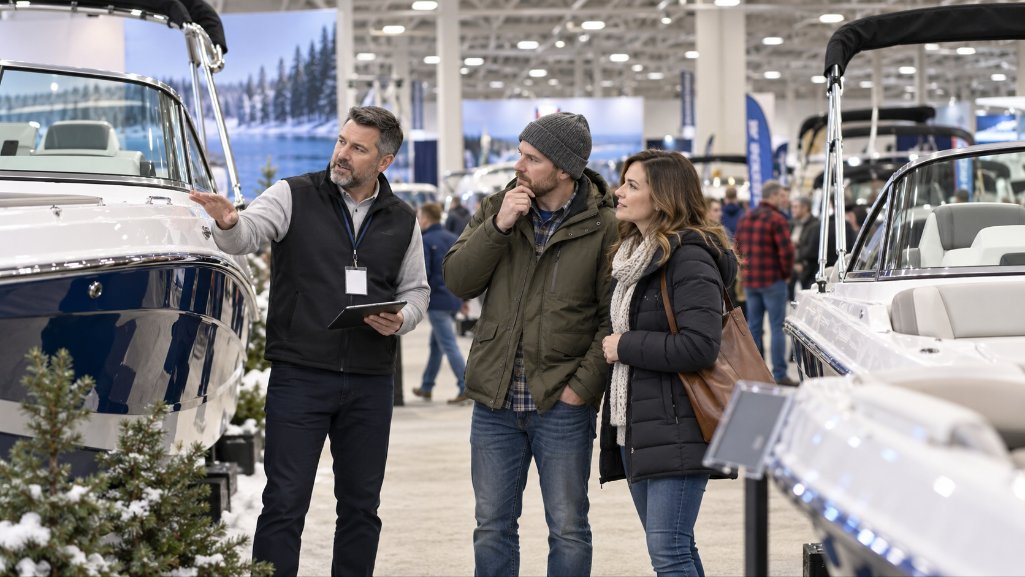
Winter gives Michigan buyers time to compare models without losing a weekend on the water. Boat shows can place multiple manufacturers and dealers in one location, which makes it easier to compare layouts, features, warranties, and pricing. Manufacturers or dealers may offer show incentives, but availability, eligibility, expiration dates, and contract terms vary.
Do not assume that a boat show price is automatically the lowest total price. Ask for an itemized purchase agreement and compare the boat, engine, trailer, accessories, delivery, and optional products. A deposit may be nonrefundable depending on the contract, so understand the cancellation and financing conditions before signing.
Winter purchases also require logistical planning. Ask where the boat will be stored, whether storage is included in the agreement, when delivery will occur, and how an inspection or water test will be handled. For used boats, limited access to a winterized engine can make a qualified marine inspection especially important.
For more information on buying a boat at a boat show, read Should You Buy a Boat at a Boat Show?
When Do Private Sellers List Boats?
Private-party availability can change throughout the year. Spring may bring listings from owners who want to sell before paying seasonal marina or maintenance costs. Late summer and fall may bring owners who have finished boating for the year or no longer want to store the boat. Winter inventory may be smaller, although some sellers may be motivated.
A private sale requires more buyer involvement than a dealership transaction. Verify that the seller’s name matches the ownership documents, check for outstanding liens, use a written purchase agreement, and confirm the identification details for the boat, motor, and trailer when applicable. Arrange a marine survey or engine inspection based on the boat’s age, value, and condition. Insurance is required for a boat financed through People Driven Credit Union.
PDCU may finance eligible boats purchased from private sellers. The boat’s age, value, and condition can affect approval and available terms. If financing is approved, PDCU normally makes the purchase check payable to the seller and must be listed as lienholder on the title. An existing lien requires coordination before the sale can be completed.
To learn more about purchasing a boat from a private seller, read How to Finance a Boat from a Private Seller.
How Financing Can Help You Shop in Any Season
Seasonal timing matters less when you know your financial boundaries. A boat loan pre-approval can help you establish a price range before talking with a dealer or private seller. It also helps you compare the purchase price, estimated APR, loan term, down payment, and total borrowing cost instead of considering only the monthly payment.
Learn about boat loan pre-approval from PDCU before you shop. You do not need to select a specific boat before applying, although final approval may depend on the boat’s age, value, condition, and other collateral considerations.
Use the boat loan calculator to test different purchase prices, down payments, estimated interest rates, and loan terms. Then add the ownership costs that are not included in a basic loan payment, such as insurance, registration, fuel, maintenance, storage, winterization, a trailer, and accessories.
To learn more about getting pre-approved for a boat loan, read Boat Loan Pre-approval: What It Is and Why It Helps.
Choose Your Buying Season Based on Your Priority
If selection matters most
Start researching in winter and shop actively as spring inventory appears. Pre-approval can help you respond to a suitable listing while staying within your budget.
If the purchase price matters most
Monitor late-summer and fall listings, but compare each price with the boat’s condition and immediate storage or repair costs. Keep an open mind about model year, features, and color to widen your options.
If inspection conditions matter most
Shop when the boat can be accessed, started, inspected, and preferably tested on the water. In Michigan, that often favors spring through early fall, depending on weather and marina access.
If you want to use the boat right away
Buying in spring or early summer can maximize same-season use. Leave time for loan closing, insurance, registration, repairs, safety equipment, and any required service before your first trip.
A Seasonal Boat-Buying Checklist
- Set a total budget that includes the purchase and ongoing ownership costs.
- Compare asking prices for similar boats by year, engine, hours, equipment, and condition.
- Get pre-approved before negotiating when financing will be part of the purchase.
- Arrange a marine survey or engine inspection appropriate for the boat.
- Confirm whether a water test is possible and what happens if it must be delayed.
- Review the title, registration, lien status, and trailer documents.
- Read deposit and purchase agreements before signing.
- Get an insurance estimate and confirm coverage can begin by closing.
- Plan for transport, storage, winterization, and spring commissioning.
- Compare the total borrowing cost, not only the monthly payment.
Finance a Michigan Boat With PDCU
People Driven Credit Union offers financing for eligible new and used boats and personal watercraft. Review current boat loan information, estimate a payment, and apply before you begin shopping.
Loan approval is subject to application, creditworthiness, membership eligibility, and collateral considerations. Available rates, loan amounts, and terms may vary based on the application and the boat’s age, value, and condition. Rates and promotional incentives are subject to change. Pre-approval does not guarantee final approval or financing for a particular boat.
Frequently Asked Questions About the Best Time to Buy a Boat
There is no single best time for every buyer. Spring may offer more selection and easier water tests, while late summer and fall may bring motivated sellers. Winter is useful for research and boat shows. Compare current inventory, total price, inspection access, financing, and storage needs. If you are starting your search, our Ultimate Guide to Boat Financing in Michigan explains the financing process from budgeting through purchase.
No. Some dealers and private sellers may be more flexible in the fall, but prices depend on inventory, demand, boat condition, model, and location. Include winterization and storage when comparing a fall purchase with another option. If you are considering a pre-owned boat, review our used boat buying checklist before deciding whether a lower purchase price represents a good value.
Not necessarily. Spring demand can be stronger, but buyers may have access to fresh inventory, inspections, water tests, and a full season of use. It can be a good choice when selection and immediate use matter more than waiting for a possible discount. If you are deciding between models, our guide to new vs. used boat financing can help you compare purchase price, depreciation, maintenance, and financing considerations.
A boat show can make comparison shopping convenient, and incentives may be available. Compare the full package and contract terms, ask whether a deposit is refundable, and confirm delivery, storage, inspection, and financing details before committing. Read our guide on buying a boat at a boat show for more tips on show pricing, incentives, deposits, contracts, and financing.
Availability varies. Listings may increase in spring as owners prepare for the season, and more boats may appear in late summer or fall when owners decide not to store them again. Evaluate every boat individually rather than assuming the season guarantees a better value. Before buying directly from an owner, learn how to finance a boat from a private seller, including title, lien, insurance, and payment considerations.
Yes. You can apply for pre-approval through PDCU before selecting a specific boat. Pre-approval can help you establish a budget and shop with a clearer idea of what you may be able to finance. Final approval may depend on updated application information and the age, value, condition, and eligibility of the boat you choose. Learn more about boat loan pre-approval and how it can help before you start shopping.
Plan for insurance, registration, storage, fuel, maintenance, winterization, transportation, safety equipment, a trailer when needed, and accessories. Used boats may also require immediate repairs or replacement equipment. Our boat loan calculator guide can help you think through your purchase price, down payment, loan payment, and other costs when setting your budget.
PDCU may finance eligible private-party boat purchases. Boat age can affect approval and available terms. Insurance is required, PDCU must be listed as lienholder, and an existing lien must be resolved as part of the transaction. Our guide to financing a boat from a private seller explains the process in more detail.

John Scharff is the Digital Marketing Lead at People Driven Credit Union, where he helps create clear, practical financial content for members and the communities PDCU serves. He focuses on making financial topics easier to understand, from loans and savings accounts to digital banking, fraud prevention, and everyday money management.
View More Posts