Used boat financing can make a pre-owned watercraft more affordable upfront, while financing a new boat may provide newer equipment, fewer immediate maintenance concerns, and manufacturer warranty coverage. Neither option is automatically better for every buyer.
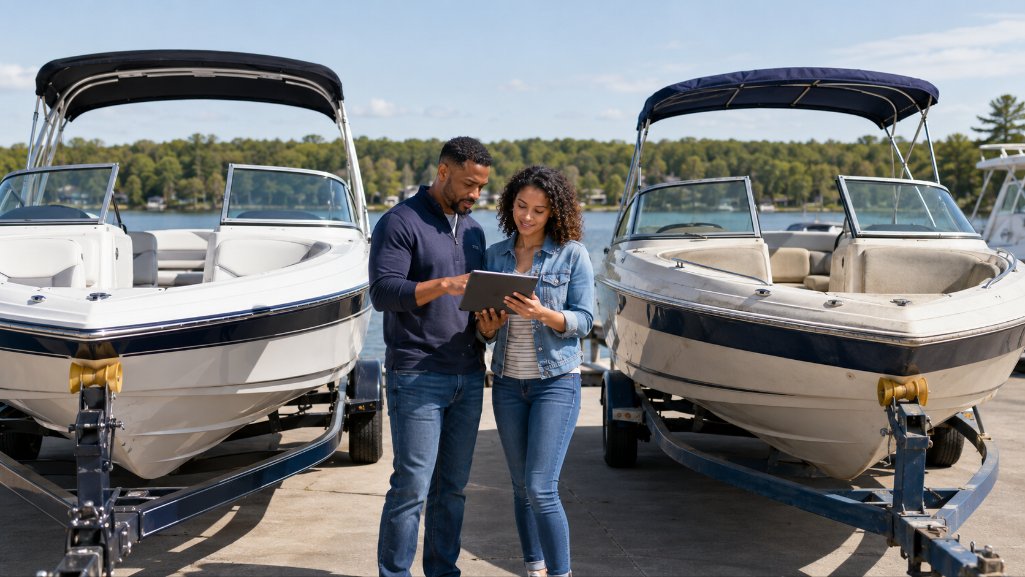
The right choice depends on the purchase price, boat condition, expected depreciation, maintenance needs, warranty coverage, and financing available for the particular watercraft.
New vs. Used Boat Financing at a Glance
| Factor | New Boat | Used Boat |
|---|---|---|
| Purchase price | Usually higher | Usually lower than a comparable new model |
| Depreciation | May lose value more quickly during the first years of ownership | The original owner has already absorbed some depreciation |
| Maintenance | May require fewer immediate repairs, but scheduled maintenance still applies | Maintenance needs depend heavily on age, condition, and service history |
| Warranty | May include manufacturer warranty coverage | Coverage may be limited, expired, or unavailable |
| Condition | Generally unused, but should still be inspected before delivery | Requires a careful review of the hull, engine, systems, and maintenance records |
| Financing | May qualify for different rates or longer terms | Available rates and terms may depend on the boat’s age, value, and condition |
These are general comparisons. The price, condition, warranty, and financing can vary considerably from one boat to another.
Purchase Price
A used boat will often have a lower purchase price than a comparable new model. That can reduce the amount you need to borrow, the required monthly payment, or the amount needed for a down payment.
A lower listed price does not always mean a lower total cost. A used boat could need repairs, replacement equipment, or immediate maintenance that a new boat may not require.
When comparing prices, identify what comes with each boat. The purchase may include or exclude:
- Motor
- Trailer
- Boat cover
- Electronics
- Dock lines and fenders
- Safety equipment
- Watersports equipment
- Other accessories
Ask for an itemized purchase agreement. This lets you compare the actual boat price and determine whether optional products or accessories have been added.
Depreciation
Depreciation is the decrease in a boat’s value over time. New boats can experience more noticeable depreciation during the first years of ownership because they begin as unused watercraft sold at current retail prices.
A used boat has already experienced some of that initial decline in value. Its future value will depend on its age, condition, maintenance, engine hours, demand, and local market.
Depreciation matters when financing because the boat secures the loan. If the loan balance decreases more slowly than the boat’s value, you could owe more than the boat is worth.
A larger down payment or shorter loan term may reduce that risk, but neither option guarantees that the boat’s value will remain above the loan balance.
Maintenance and Repairs
Every boat requires maintenance, whether it is new or used. The difference is how soon certain repairs may be needed and how predictable those expenses are.
Maintenance on a New Boat
A new boat may be less likely to need major repairs immediately. However, you will still need to follow the manufacturer’s maintenance schedule and prepare the boat for seasonal use and storage.
New boat maintenance may include:
- Engine break-in service
- Oil and filter changes
- Hull and upholstery care
- Battery maintenance
- Trailer maintenance
- Winterization
Maintenance on a Used Boat
A used boat may need replacement parts or deferred maintenance sooner. Review available service records to see what work has been completed and what may be due next.
Pay close attention to:
- Engine hours and service history
- Hull, transom, and deck condition
- Steering and controls
- Fuel and electrical systems
- Bilge pumps
- Upholstery and canvas
- Trailer tires, bearings, brakes, and lights
- Signs of improper storage or water damage
Set aside money for repairs even if the used boat appears to be in good condition. An inspection can identify visible concerns, but it cannot predict every future problem.
Warranty Coverage
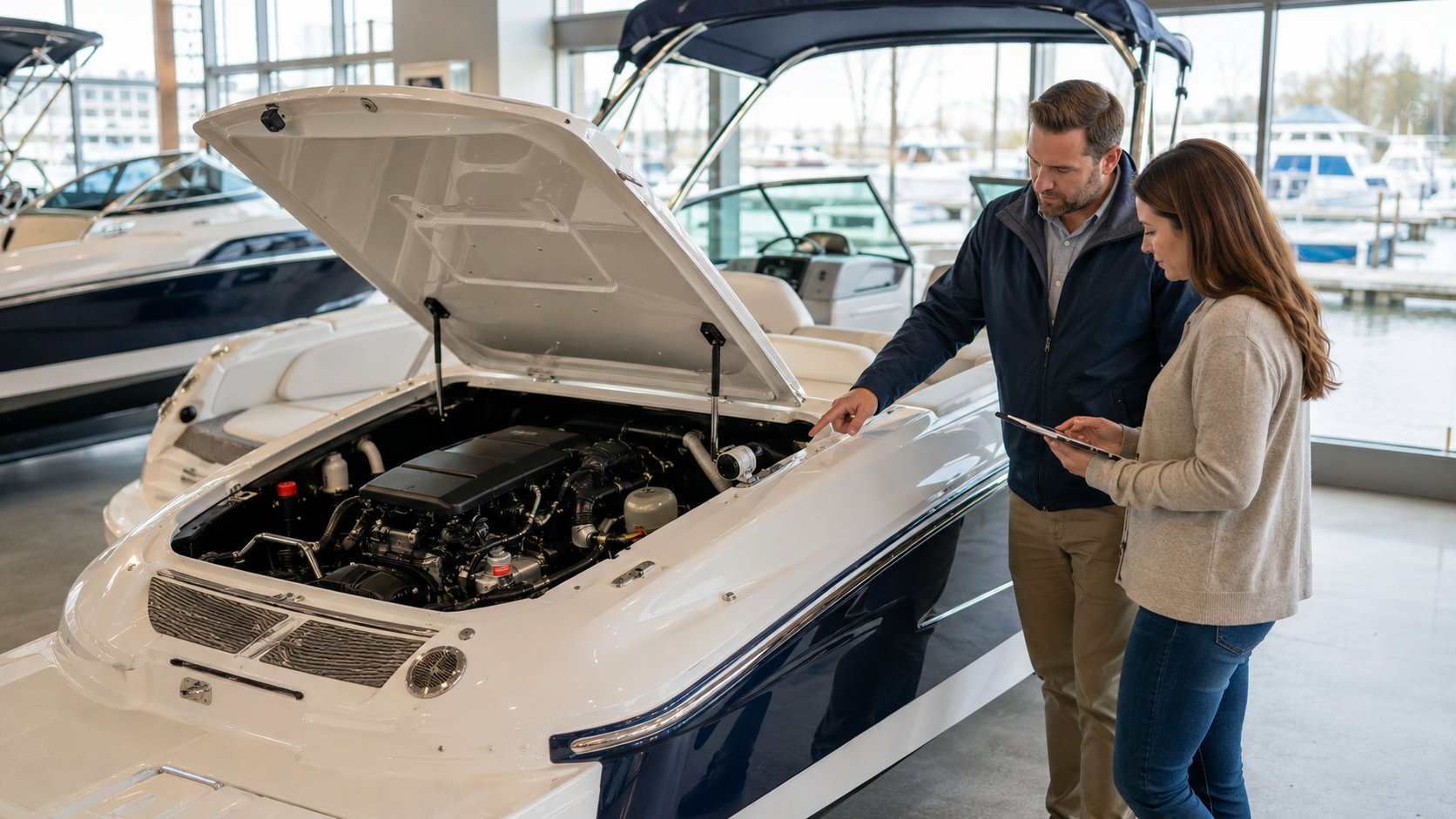
A new boat may include warranties covering certain parts of the boat, motor, or installed equipment. Coverage may come from different manufacturers, so the hull, engine, electronics, and trailer might not share the same terms.
Before buying a new boat, ask:
- Which components are covered?
- How long does each warranty last?
- When does the coverage begin?
- What maintenance is required?
- Where can warranty service be completed?
- What situations or types of damage are excluded?
A used boat may have remaining warranty coverage, but do not assume it transfers automatically to a new owner. Confirm the terms with the manufacturer and request documentation from the seller.
Any optional service contract should be reviewed separately. Understand what it covers, how long it lasts, where repairs can be completed, and what exclusions apply.
Boat Condition
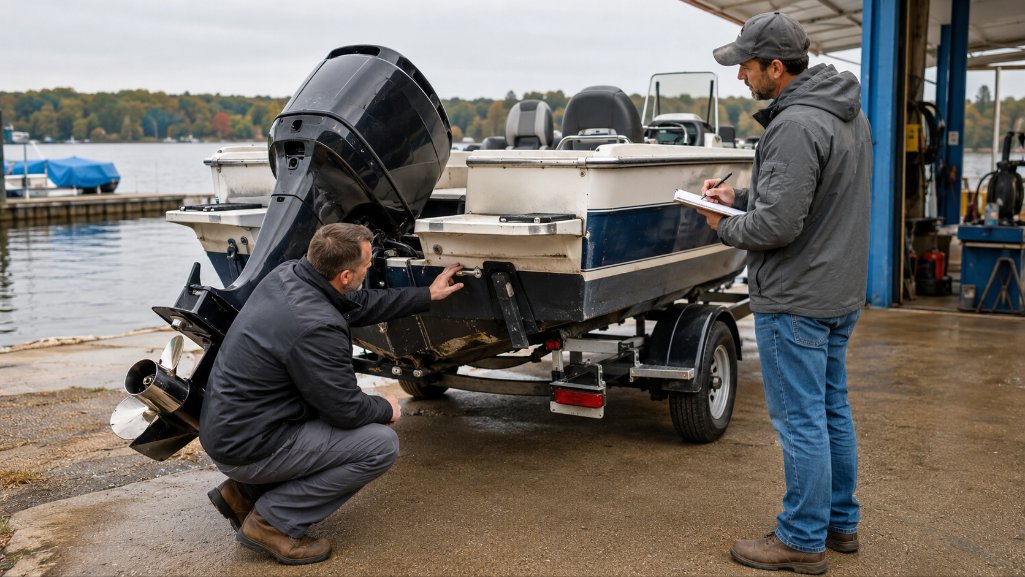
Condition matters when evaluating both the purchase and used boat financing. A lender may consider the watercraft’s condition when determining its supported value and whether it qualifies as collateral.
A clean appearance does not prove that a boat is mechanically sound. Inspect areas that may be difficult to see during a basic walk-through.
Review the Boat’s History
Ask the seller about:
- Previous owners
- Freshwater or saltwater use
- Storage history
- Accidents or major repairs
- Engine replacement
- Maintenance records
- Current or previous liens
Consider a Marine Inspection
For an older, larger, or more complex boat, consider hiring an independent marine surveyor. A survey may provide information about the hull, systems, equipment, condition, and estimated value.
Arrange a sea trial when possible. A sea trial lets you observe how the boat starts, idles, shifts, steers, accelerates, and performs on the water.
Ask the lender and insurance provider whether they require a survey, inspection, valuation, or other documentation for the selected boat.
Available Boat Loan Rates and Terms
New and used boats may qualify for different rates and loan terms. Available financing can depend on:
- Creditworthiness
- Purchase price
- Requested loan amount
- Down payment
- Loan term
- Boat age
- Boat value and condition
- Loan-to-value ratio
People Driven Credit Union finances eligible new and used boats and personal watercraft. Older boats may have different rates, terms, or approval requirements.
Review the current PDCU boat loan rates and terms before comparing payments. Rates are subject to change, and the lowest advertised APR may not be available to every borrower or watercraft.
How Boat Age Can Affect Used Boat Financing
The boat’s age can affect both its collateral value and the financing available. As a boat gets older, its condition and maintenance history become more important.
A lender may place limits on the terms available for an older boat. PDCU’s current boat loan information also explains how age may affect the applicable rate and when older watercraft may require individual consideration.
Before making an offer on an older boat, contact PDCU with the year, make, model, purchase price, and requested loan amount. This can help you determine whether the watercraft may meet the lending requirements.
Compare the Entire Financing Offer
Do not compare new and used boat financing based only on the monthly payment. A lower payment could result from a longer term rather than a lower purchase price or APR.
Compare:
- Boat purchase price
- Down payment
- Amount financed
- APR
- Loan term
- Monthly payment
- Total interest
- Total of all payments
Use the PDCU boat loan calculator to estimate how different prices, rates, down payments, and loan terms may affect the payment and total interest.
Calculator results are estimates for planning purposes. They do not guarantee approval or available financing terms.
Consider the Full Cost of Ownership
The loan payment is only one part of the decision. Estimate the ongoing costs for each boat before choosing between new and used.
Your ownership budget may include:
- Insurance
- Registration and title expenses
- Fuel
- Docking or marina storage
- Winter storage
- Winterization
- Routine maintenance
- Repairs
- Safety equipment
- Trailer and towing equipment
A used boat with a lower payment may need more maintenance. A larger new boat may have warranty coverage but cost more to insure, fuel, transport, and store.
When a New Boat May Be the Better Fit
A new boat may make sense if you:
- Want current features and equipment
- Prefer manufacturer warranty coverage
- Want fewer immediate maintenance concerns
- Plan to keep the boat for several years
- Can manage the higher purchase price and ownership costs
Review the warranty, expected depreciation, financing, and total ownership costs before deciding.
When a Used Boat May Be the Better Fit
Used boat financing may make sense if you:
- Want a lower purchase price
- Want more boat or equipment within a fixed budget
- Want to avoid some initial depreciation
- Can evaluate the boat’s condition and maintenance history
- Have room in your budget for repairs and replacement equipment
The best used boat is not necessarily the least expensive one. A properly maintained boat with complete records may provide better long-term value than a lower-priced boat with deferred maintenance.
Get Pre-approved Before You Shop
Boat loan pre-approval can help you establish a budget before comparing new and used watercraft. It can also help you discuss the purchase price separately from dealer financing and optional products.
You do not need to select a specific boat before applying with People Driven Credit Union. Once you choose a watercraft, final approval may depend on its type, age, value, condition, and the completed transaction details.
Learn more about boat loan pre-approval.
Finance a New or Used Boat With PDCU
People Driven Credit Union offers financing for eligible new and used boats and personal watercraft. You can review current rates, estimate your payment, or apply before you begin shopping.
Explore New and Used Boat Financing
Loan approval is subject to application, creditworthiness, membership eligibility, and collateral considerations. Available APRs, loan amounts, and terms may vary based on the watercraft’s age, type, value, and condition.

John Scharff is the Digital Marketing Lead at People Driven Credit Union, where he helps create clear, practical financial content for members and the communities PDCU serves. He focuses on making financial topics easier to understand, from loans and savings accounts to digital banking, fraud prevention, and everyday money management.
View More Posts