A boat loan calculator can help you estimate how the purchase price, down payment, trade-in value, Annual Percentage Rate, and loan term may affect your monthly payment. The payment is only one part of determining how much boat you can afford.

You should also plan for insurance, registration, storage, fuel, maintenance, winterization, safety equipment, and accessories. Building a complete budget before shopping can help you compare boats that fit both your financing needs and your expected ownership costs.
Start With the PDCU Boat Loan Calculator
The People Driven Credit Union boat loan calculator lets you enter different purchase and financing details to estimate a monthly payment.
You can adjust:
- Purchase price
- Cash rebate
- Trade-in value
- Amount owed on your trade-in
- Down payment
- Annual interest rate
- Loan term in months
Try several combinations rather than relying on one result. This can show you how changing the boat price, down payment, rate, or term may affect your estimated payment and total interest.
A calculator provides estimates for planning purposes. It does not guarantee loan approval, an available loan amount, APR, term, or monthly payment. Actual financing may depend on your application, creditworthiness, membership eligibility, and the boat’s age, value, type, and condition.
Decide What Monthly Payment Fits Your Budget
Begin with the amount you can comfortably dedicate to boat ownership each month. Do not assign that entire amount to the loan payment.
For example, if you determine how much room you have in your monthly budget, subtract your estimated costs for insurance, storage, fuel, maintenance, and other recurring expenses. The remaining amount gives you a more realistic target for the boat payment.
Review your budget during an average month and during months when boat expenses may be higher. Fuel use may increase during the summer, while storage and winterization costs may arrive later in the year.
Purchase Price
The purchase price has a direct effect on the amount you may need to finance. A higher price generally means a larger loan, a larger down payment, or both.
Make sure the advertised price includes everything you expect to purchase. A boat listing may or may not include:
- Motor
- Trailer
- Electronics
- Boat cover
- Docking equipment
- Safety equipment
- Other accessories
Ask the dealer or private seller for an itemized purchase agreement. This makes it easier to identify the boat’s actual price and determine which optional items you want to finance or purchase separately.
Down Payment
A down payment reduces the amount you need to borrow. Depending on the financing terms, it may also reduce your estimated monthly payment and the total interest paid over the life of the loan.
Before using a large portion of your savings for a down payment, consider what you will need after the purchase. Keep room in your budget for insurance, registration, transportation, immediate maintenance, safety equipment, and unexpected repairs.
A down payment may be required depending on your application, the boat’s value, and the requested loan structure. Ask your lender what may be required for the watercraft you plan to purchase.
Trade-In Value
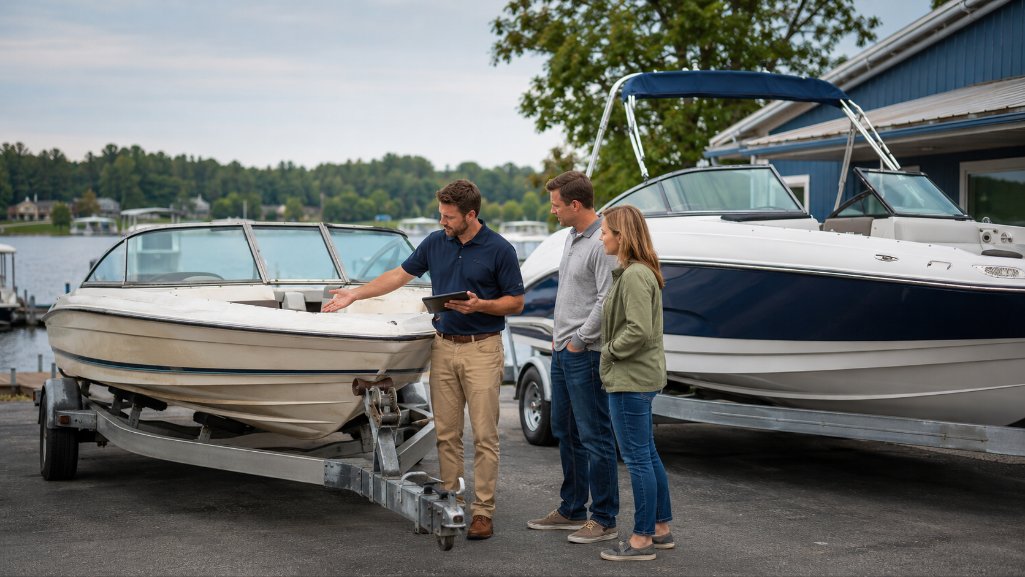
If you already own a boat or personal watercraft, its trade-in value can reduce the amount you need to finance. However, the value of the trade-in and the amount you still owe are two different numbers.
Calculate your trade-in equity by subtracting the existing loan payoff from the trade-in value:
Trade-in value minus loan payoff equals trade-in equity.
If the trade-in is worth more than the payoff, the remaining equity may reduce the amount financed. If you owe more than the trade-in is worth, you have negative equity. Financing negative equity with the new purchase increases the requested loan amount and may affect the available terms.
Compare the dealer’s trade-in offer with current market information. Selling the boat privately could produce a different amount, but it may require more time, paperwork, and coordination.
Annual Percentage Rate
The Annual Percentage Rate, commonly called APR, reflects the yearly cost of borrowing expressed as a percentage. Even a small difference in APR can affect the monthly payment and total interest, especially on a larger loan or longer term.
Your available APR may depend on factors such as:
- Creditworthiness
- Amount borrowed
- Loan term
- Boat age and value
- Boat type and condition
- Loan-to-value ratio
When using the boat loan calculator, enter an APR that reflects the financing you may qualify for. You can also test a higher rate to see whether the payment would still fit your budget.
Review the current PDCU boat loan rates before calculating your estimated payment. Rates are subject to change, and the advertised lowest rate may not be available to every borrower or for every watercraft.
Loan Term
The loan term is the number of months you have to repay the loan. It has a significant effect on both the monthly payment and total borrowing cost.
Shorter Loan Term
A shorter term will generally produce a higher monthly payment. It may reduce the total interest paid because you repay the balance sooner.
Longer Loan Term
A longer term will generally produce a lower monthly payment. It may increase the total interest paid because the balance remains outstanding longer.
Do not choose a term based only on the lowest monthly payment. Compare the monthly payment, total interest, and total of payments for each option.
The terms available to you may depend on the amount financed and the boat’s age and value. The calculator can estimate different repayment periods, but it does not confirm that a particular term will be available.
Boat Insurance
Your lender may require insurance before completing a boat loan. Insurance can also help protect against certain losses involving the boat, trailer, equipment, theft, weather, accidents, or liability.
Ask an insurance professional for an estimate before buying. The cost and available coverage may depend on:
- Boat type, size, age, and value
- Engine type and horsepower
- Where and how the boat will be used
- Where the boat will be stored
- Who will operate the boat
- Selected coverage and limits
Review the policy’s coverage, exclusions, navigation limits, storage requirements, and deductibles. Do not assume your homeowners or renters insurance provides the boat coverage you need.
Michigan Registration and Titling
Include watercraft registration and title expenses in your purchase budget. Michigan requirements depend on the boat’s size, engine, and type.
The Michigan Secretary of State generally issues watercraft registrations for three years. Titles are generally required for watercraft at least 20 feet long or watercraft with a permanently affixed engine, regardless of length. Different rules may apply to certain exempt or federally documented vessels.
Review the current Michigan watercraft registration and title requirements before purchasing. If a trailer is included, check its title and registration requirements separately.
Docking and Storage
Decide where the boat will stay during boating season and during the Michigan winter. Storage needs can substantially change the cost of ownership.
Possible arrangements include:
- Home storage
- Outdoor storage facility
- Indoor storage facility
- Dry-stack marina storage
- Seasonal dock or marina slip
- Boat lift at a home or cottage
Home storage may require enough driveway or property space, a suitable trailer, a cover, and compliance with local rules. Marina storage may offer convenience but should be included in your monthly or annual budget.
Ask storage providers what is included. Launching, hauling, battery care, winterization, spring preparation, and trailer storage may be handled separately.
Fuel
Fuel costs can vary widely. A boat’s size, weight, engine, speed, load, water conditions, and frequency of use can all affect consumption.
Estimate how often you expect to use the boat and how long a typical outing may last. Ask the dealer, seller, or manufacturer for available fuel-consumption information, but remember that real-world use can differ.
Build some flexibility into your fuel estimate. A boat used for cruising at moderate speeds may consume fuel differently from the same boat used for watersports or frequent high-speed operation.
Maintenance and Repairs
Every boat requires maintenance. A used boat may need attention sooner, while a new boat still requires scheduled service and proper care.
Your maintenance budget may include:
- Engine service
- Oil and filter changes
- Battery replacement
- Propeller service
- Hull cleaning
- Bottom paint, when applicable
- Upholstery and canvas care
- Trailer tires, bearings, brakes, and lights
- Electrical or navigation equipment repairs
Review maintenance records when buying a used boat. Consider an independent marine inspection for an older, larger, or more complex watercraft.
Keep savings available for unexpected repairs. Using every available dollar for the purchase or down payment can leave little room when the boat needs service.
Winterization
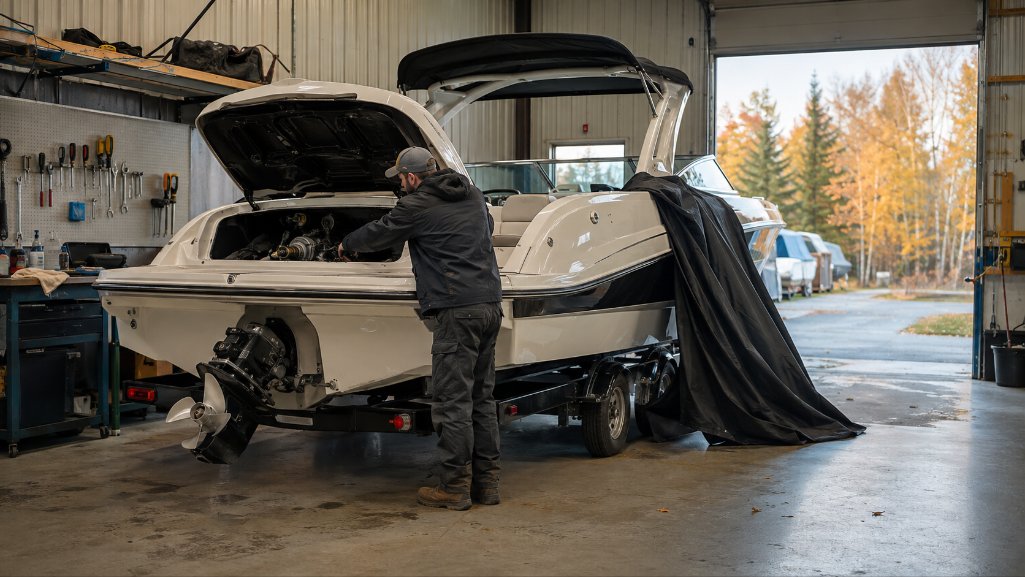
Michigan winters make seasonal preparation an important part of a boat budget. Proper winterization can help protect the engine, plumbing, batteries, fuel system, and other components during freezing temperatures and extended storage.
Winterization needs depend on the boat and engine. The process may include:
- Engine and fuel-system preparation
- Draining water systems
- Battery removal or maintenance
- Cleaning and drying the interior
- Protecting against moisture and pests
- Covering or shrink-wrapping the boat
- Preparing the trailer for storage
Ask a qualified marine service provider what your boat requires. If you plan to handle winterization yourself, follow the manufacturer’s instructions and make sure you have an appropriate storage location.
Accessories and Safety Equipment
A boat may need additional equipment before it is ready for regular use. Some purchases are optional, while others may be required for safety or legal operation.
Your list could include:
- Properly sized life jackets
- Throwable flotation device
- Fire extinguisher
- Dock lines and fenders
- Anchor and anchor line
- Navigation equipment
- Emergency signaling equipment
- First-aid kit
- Boat cover
- Trailer accessories
- Watersports equipment
Check what comes with the boat before purchasing accessories. Used boats may include equipment, but inspect each item to confirm that it is suitable and in usable condition.
Create a Monthly and Annual Boat Budget
Some expenses occur every month. Others arrive once or twice a year. Separating the two can make your budget more accurate.
Possible Monthly Costs
- Loan payment
- Insurance
- Fuel
- Marina or storage payment
- Routine maintenance savings
Possible Annual or Seasonal Costs
- Registration or title expenses
- Winterization
- Winter storage
- Spring preparation
- Major scheduled maintenance
- Replacement safety equipment
Divide your estimated annual expenses by 12 and include that amount in your monthly budget. Setting money aside throughout the year can make seasonal costs easier to handle when they arrive.
Use Several Boat Loan Calculator Scenarios
Run several estimates before choosing a price range. Consider testing:
- A lower and higher purchase price
- Different down payment amounts
- Buying with and without a trade-in
- Several possible APRs
- Shorter and longer loan terms
Compare more than the monthly payment. Review the estimated amount financed, total interest, and total amount paid. Then add your expected ownership costs to decide whether the boat fits your budget.
How Much Boat Can You Afford?
The answer depends on more than the amount a lender may approve. A boat may fit your budget when the monthly loan payment, insurance, registration, storage, fuel, maintenance, winterization, accessories, and savings for repairs can all be managed without crowding out your other priorities.
Start with the PDCU boat loan calculator, build a complete ownership budget, and adjust the boat price until the numbers work for you.
Calculator results are estimates for educational and planning purposes. They do not guarantee approval, loan amount, APR, term, payment, or financing. Actual terms may vary based on your application, creditworthiness, membership eligibility, and collateral considerations.

John Scharff is the Digital Marketing Lead at People Driven Credit Union, where he helps create clear, practical financial content for members and the communities PDCU serves. He focuses on making financial topics easier to understand, from loans and savings accounts to digital banking, fraud prevention, and everyday money management.
View More Posts