Buying a boat from a private seller can give you more choices and room to negotiate, but the financing process requires more work from you and the seller. Unlike a dealership, an individual seller usually will not coordinate the title, loan documents, lien, insurance, and payment process.
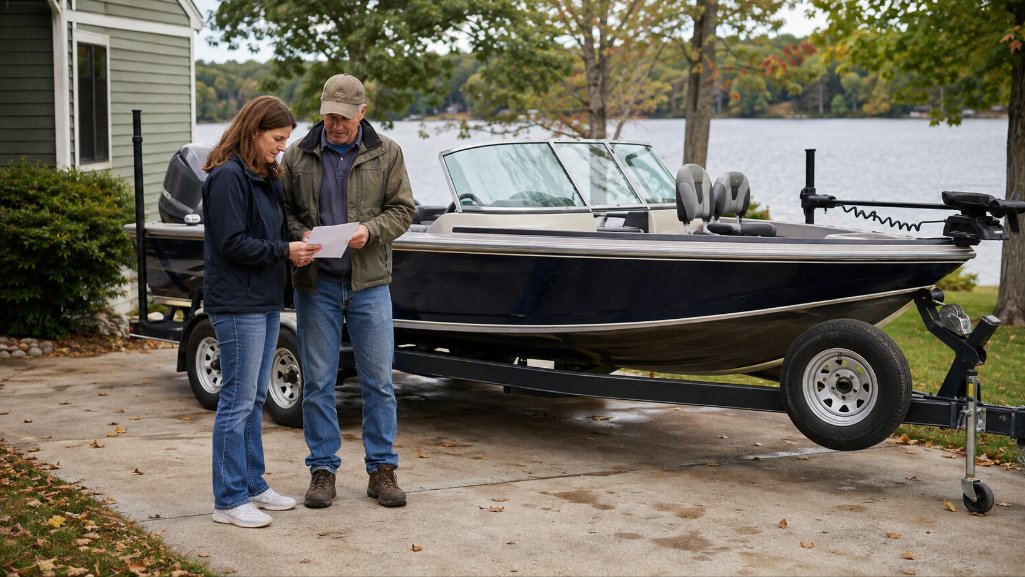
People Driven Credit Union finances eligible boats purchased from private sellers. Approval and available loan terms depend on your application and the boat’s age, value, and condition. Older boats may have different financing options or require additional review.
This guide explains how a private-party boat purchase works, which documents you may need, and what to check before money changes hands.
How Is Buying from a Private Seller Different?
A dealership regularly handles boat sales and may prepare much of the ownership paperwork. A private seller usually expects the buyer to coordinate those details with the lender and the Michigan Secretary of State.
| Part of the Purchase | Dealership Purchase | Private Seller Purchase |
|---|---|---|
| Purchase documents | The dealer usually prepares its standard sales documents. | You and the seller need a complete written purchase agreement. |
| Ownership records | The dealer often helps coordinate title and registration paperwork. | You need to verify the title or registration and the seller’s ownership. |
| Existing liens | The dealer may help manage a trade-in payoff or lien release. | You need to identify any lien and coordinate the required payoff or release with PDCU. |
| Boat condition | A dealer may provide service records, inspection information, or a warranty. | The boat is often sold as-is, so an independent inspection becomes more important. |
| Seller payment | The lender and dealer coordinate funding. | PDCU normally issues the purchase check directly to the seller after loan and title requirements are satisfied. |
1. Get Pre-approved Before Contacting Sellers
Pre-approval can help you establish a price range before you start comparing boats. It also gives you time to discuss the private-party process with PDCU before you agree to a purchase.
During the application review, the loan amount, Annual Percentage Rate, and available term may depend on your creditworthiness, the amount requested, and the boat’s age, value, and condition. The age of the boat can affect approval, much like it can with a used vehicle loan.
Use the PDCU boat loan calculator to compare estimated payments at different purchase prices, down payments, interest rates, and loan terms. Calculator results are estimates and do not guarantee approval or final loan terms.
Learn more about getting pre-approved for a boat loan.
2. Verify the Seller and the Boat
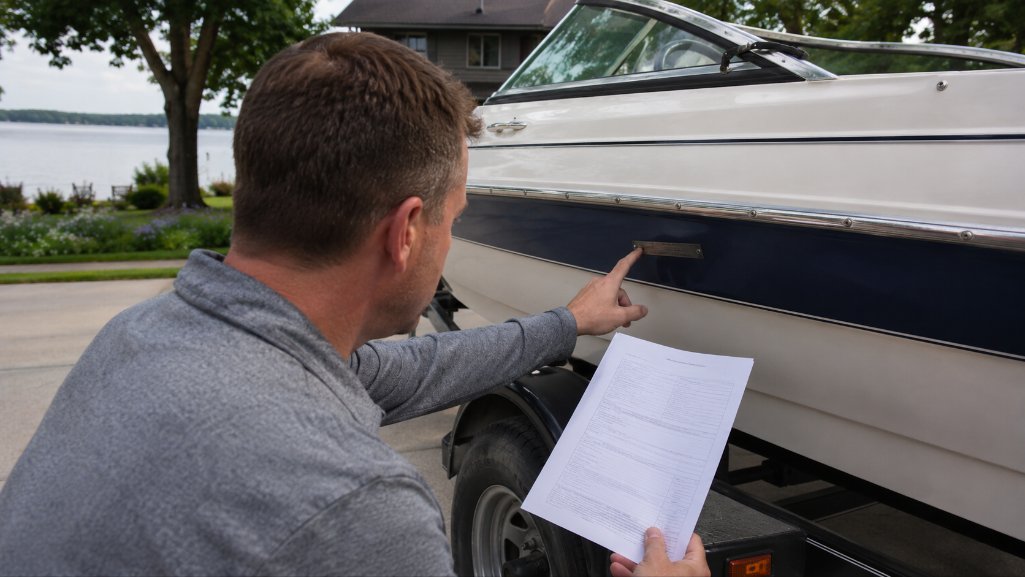
Before you negotiate, confirm that the person selling the boat has the legal authority to sell it. Ask to see the seller’s identification and the current title or registration. The seller’s name should match the ownership record.
Compare the hull identification number, or HIN, on the boat with the number shown on the title, registration, and purchase agreement. The HIN is the watercraft equivalent of a vehicle identification number. A missing, altered, or mismatched HIN needs to be resolved before you proceed.
Michigan title requirements vary by watercraft. The state generally requires a title for watercraft that are 20 feet or longer and watercraft with a permanently affixed engine, regardless of length. A federally documented vessel follows a different ownership process. If a watercraft is not titled, ownership may be assigned using its registration or other documentation accepted by the Michigan Secretary of State.
Because PDCU needs to be listed as the lienholder, a boat that would not otherwise require a Michigan title may need to be titled as part of the financing process. Confirm the required documents with your loan specialist before completing the sale.
3. Check for Existing Liens
A lien means another lender or secured party has a legal interest in the boat. Do not assume that possession of the boat proves the seller owns it free and clear.
Review the title for a listed lienholder. If a lien appears, ask the seller for current payoff and lien-release information. An electronic title generally cannot be transferred until the existing lien is released. A paper title may also require proof that the lien was terminated or authorization from the lienholder.
Tell PDCU about the lien before signing the final documents or arranging payment. The loan specialist can explain what payoff or release documentation will be needed. Do not pay the seller directly or rely on a promise that the seller will clear the lien later.
4. Inspect the Boat Before Committing
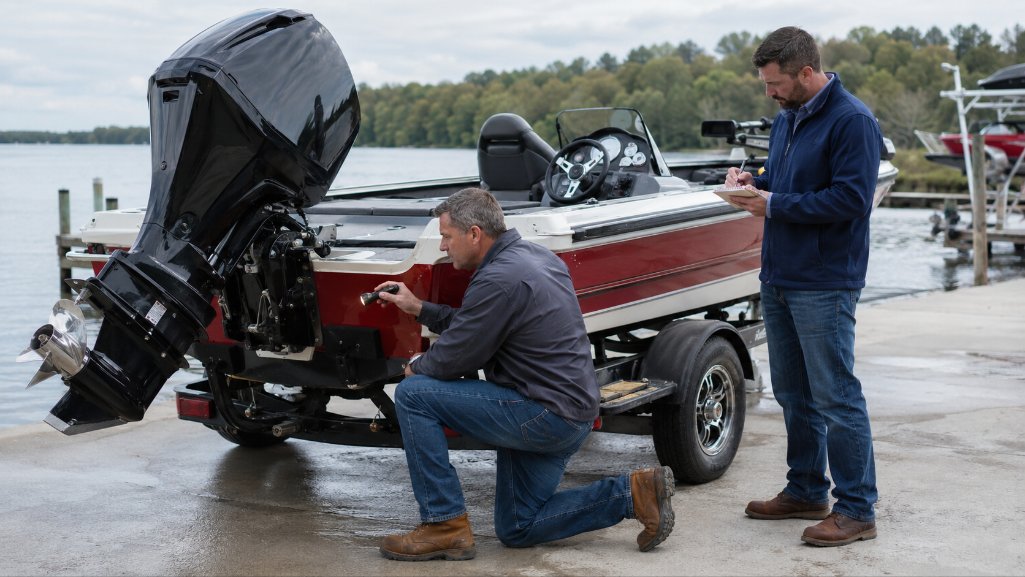
A private seller may sell the boat as-is. That makes your inspection one of the most important parts of the purchase.
For a used boat, consider hiring a qualified marine surveyor or technician who is independent of the seller. The appropriate inspection depends on the boat’s type, size, age, and value.
An inspection may cover:
- The hull or pontoons for cracks, corrosion, leaks, damage, and previous repairs
- The deck, transom, flooring, upholstery, and structural components
- The engine, hours, fluids, cooling system, controls, and service history
- The steering, electrical system, batteries, pumps, lights, and gauges
- The propeller, lower unit, and other drive components
- Safety equipment and included accessories
- The trailer’s frame, tires, bearings, lights, brakes, and title or registration
When possible, arrange an on-water test. A motor can behave differently under load than it does when running on a trailer. Put any inspection or test contingency in the purchase agreement so both parties understand what happens if the boat has a serious problem.
5. Write a Complete Purchase Agreement
A handshake is not enough for a financed boat purchase. Create a written agreement that identifies the buyer, seller, boat, agreed price, included property, and conditions of the sale.
The agreement should generally include:
- The buyer’s and seller’s full legal names and addresses
- The boat’s year, make, model, length, and HIN
- The Michigan registration number, when available
- The engine year, make, model, horsepower, and serial number
- Trailer information, including its vehicle identification number, when included
- The final purchase price
- Any deposit already paid
- A list of equipment and accessories included in the sale
- Any known liens and the steps required to release them
- Inspection, financing, or title conditions
- The expected closing and possession date
- The signatures and dates of both parties
Ask your PDCU loan specialist whether the agreement needs any additional information before you and the seller sign it. Do not leave important promises about repairs, equipment, or lien removal out of the written agreement.
6. Submit the Boat Documents to PDCU
After you choose a boat, PDCU will need information about both the purchase and the collateral. Specific requirements can vary, but you should be prepared to provide the title or registration, purchase agreement, lien information, HIN, and other identifying details for the boat, motor, and trailer.
PDCU also requires insurance for a financed boat. Arrange coverage before closing and provide the insurance documentation requested by your loan specialist. Confirm the required coverage and how People Driven Credit Union should appear on the policy.
Do not cancel an inspection or promise the seller a closing date until PDCU has reviewed the required documents. Pre-approval does not guarantee financing for a specific boat. Final approval depends in part on the boat’s age, value, condition, and acceptable ownership records.
7. Complete the Title and Lien Paperwork
PDCU must be listed as the lienholder on the title. Your loan specialist will explain how the title paperwork should be completed and which documents need to be submitted.
If the boat has a Michigan title, the seller must properly assign it to you. If the boat does not have a title, PDCU may require you to obtain one so its lien can be recorded. The trailer may have separate ownership and registration documents, so do not assume the boat’s paperwork covers the trailer.
Avoid crossed-out information, blank fields, or signatures in the wrong place. Title errors can delay the transfer and loan funding. If anything on the ownership record is unclear, stop and ask PDCU or the Michigan Secretary of State what must be corrected.
8. Let PDCU Pay the Seller
For a typical private-party boat purchase, PDCU makes the purchase check payable directly to the seller. This helps connect the loan proceeds to the documented sale while PDCU completes the steps needed to place its lien on the title.
If another lender already has a lien on the boat, the payment and title process may require additional coordination. Follow the instructions from your PDCU loan specialist. Do not give the seller separate loan funds, accept an unsigned title, or take possession based on an informal promise to finish the paperwork later.
Before the exchange, confirm:
- Who must attend or sign the closing documents
- How and when the seller will receive the check
- How an existing lien will be released
- When you may take possession of the boat and trailer
- Which title and registration steps remain after closing
Private-Seller Boat Financing Checklist
- Apply for pre-approval and establish your budget.
- Confirm that the boat’s age may qualify for financing.
- Verify the seller’s identity and ownership.
- Match the HIN to the ownership documents.
- Identify and resolve any existing liens.
- Arrange an independent inspection and on-water test when appropriate.
- Complete a detailed purchase agreement.
- Submit the boat, motor, trailer, and seller information requested by PDCU.
- Obtain the required insurance.
- Complete the title transfer with PDCU listed as lienholder.
- Let PDCU issue the purchase check to the seller.
To learn more about buying a used boat from a private seller, read: Buying a Used Boat: Financial and Inspection Checklist
Finance a Boat From a Private Seller
People Driven Credit Union finances eligible private-party boat purchases. Apply before you shop, then work with a PDCU loan specialist to review the boat, seller, title, insurance, and purchase documents.
Loan approval is subject to application, creditworthiness, membership eligibility, and collateral considerations. Available loan amounts, rates, and terms may vary based on the boat’s age, value, and condition. Rates are subject to change.
Frequently Asked Questions
Yes. People Driven Credit Union finances eligible boats purchased directly from private sellers. Approval and available terms depend on your application and the boat’s age, value, and condition.
PDCU normally makes the purchase check payable directly to the seller after the loan, title, and other documentation requirements are satisfied. PDCU can deliver funds to the seller by check or wire. Your loan specialist will confirm the payment arrangements and requirements for recording PDCU as the lienholder on the title.
In addition to the title, purchase agreement, lien information, boat identification details, and required insurance, underwriting may request additional documentation. Depending on the transaction, this could include a marine survey or a copy of a brokerage contract.
Tell PDCU before completing the purchase. The existing lien must be addressed so ownership can transfer and PDCU’s lien can be recorded. Your loan specialist will explain the payoff and documentation requirements for the transaction.
No. Michigan generally requires titles for watercraft that are at least 20 feet long or have a permanently affixed engine. However, a boat that is not normally titled may need a title when a lender’s lien must be recorded. Review the current Michigan watercraft registration and title requirements before purchasing. If a trailer is included, check its title and registration requirements separately.
Yes. PDCU requires insurance for a financed boat. Ask your loan specialist what coverage and proof of insurance are needed before closing.
Arrange the inspection before making an unconditional commitment whenever possible. If you sign first, include a written inspection contingency that explains what happens if the boat has an unacceptable problem.
Yes. You can apply for PDCU boat loan pr-eapproval before choosing a specific boat. Final approval still depends on the completed application and the boat offered as collateral.

John Scharff is the Digital Marketing Lead at People Driven Credit Union, where he helps create clear, practical financial content for members and the communities PDCU serves. He focuses on making financial topics easier to understand, from loans and savings accounts to digital banking, fraud prevention, and everyday money management.
View More Posts