Buying an RV from a private seller may give you access to more used models and price points than you would find at a dealership. The process requires some extra coordination because there is no dealer handling the title, financing documents, lien payoff, or payment.
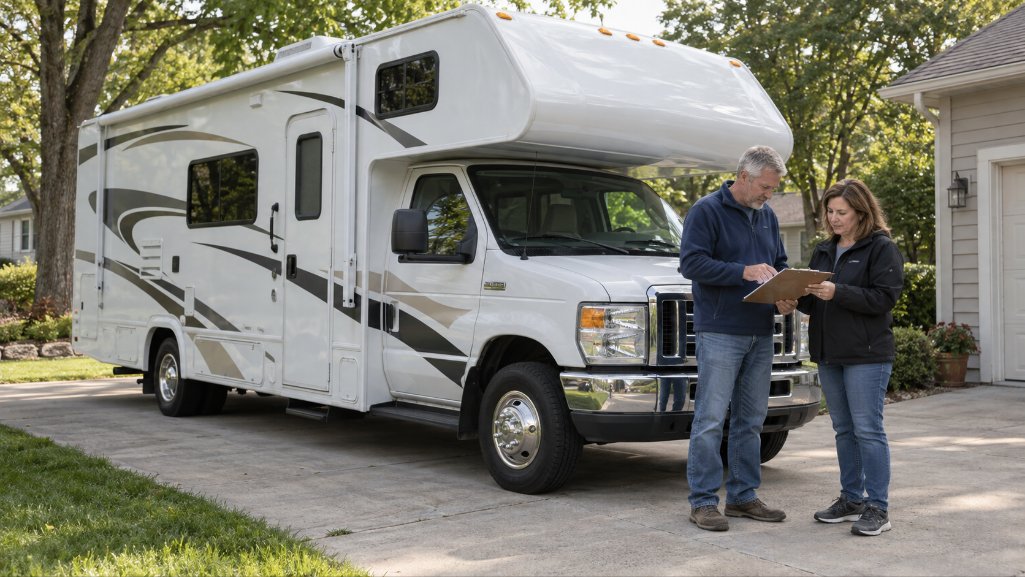
A private party RV loan can help finance an eligible motorhome, travel trailer, fifth wheel, or pop-up camper purchased directly from its owner. Before agreeing to the sale, confirm that your lender will finance the RV and ask what documents it needs from you and the seller.
Do not pay the seller or take possession of the RV until the lender has reviewed the transaction and explained how the funds and title should be handled.
How a private party RV loan works
The exact process varies by lender, the RV, and whether the seller still owes money on it. A typical private-sale transaction follows these steps:
- Establish your budget and apply for financing.
- Find an RV that fits the lender’s age, value, and condition requirements.
- Collect information about the RV and its owner.
- Verify the title, vehicle identification number, and any existing lien.
- Arrange an independent inspection.
- Prepare a written purchase agreement.
- Provide the required documents to the lender.
- Arrange any required insurance coverage.
- Complete the loan documents.
- Allow the lender to coordinate payment and its lien on the title.
| Step | What to review | Why it matters |
|---|---|---|
| Financing | Loan amount, available rate, term, down payment, and collateral requirements | Confirms whether the RV and proposed purchase may qualify |
| Title | Owner name, vehicle identification number, title status, and listed liens | Helps verify that the seller has the legal ability to transfer ownership |
| Inspection | Mechanical systems, structure, roof, plumbing, appliances, tires, and signs of water damage | Identifies problems that may affect safety, value, or financing |
| Purchase agreement | Buyer, seller, RV description, price, deposit, and conditions of sale | Documents the terms accepted by both parties |
| Insurance | Required coverage, effective date, and lender information | The lender may require proof of coverage before releasing funds |
| Payment | Seller payment, lienholder payoff, and down payment instructions | Ensures funds go to the correct parties |
| Title transfer | Required signatures, lien release, lender lien, and state filing process | Establishes ownership and records the lender’s interest in the RV |
Start with RV loan pre-approval
An RV loan pre-approval can help you establish a potential financing range before contacting private sellers. You can use that information to focus on RVs within your budget and discuss the purchase price separately from financing.
Pre-approval does not guarantee final loan approval. The lender will still need to review the selected RV, purchase price, title, value, age, condition, and transaction documents.
Ask the lender how long the pre-approval remains valid and what to do when you find an RV. Avoid promising payment to a seller until the lender confirms that the RV and transaction meet its requirements.
Information the lender may request
Once you find an RV, the lender may request information from both you and the seller. Requirements vary, but you may need to provide:
- The RV’s year, make, model, and trim
- The vehicle identification number, commonly called the VIN
- The current mileage for a motorhome
- The agreed purchase price
- A copy of the current title
- The seller’s name and contact information
- A written purchase agreement or bill of sale
- Photos or documentation showing the RV’s condition
- Details about accessories included in the sale
- Information about an existing lien or loan
- A payoff statement from the seller’s lienholder
- Proof of insurance when required
The lender may also review an RV valuation source to compare the purchase price with the collateral value. If the agreed price is higher than the lender’s assigned value, you may need to negotiate a lower price, make a larger down payment, or choose a different RV.
Verify the RV title and seller
Title verification should happen before you provide a deposit or complete the sale. Ask to see the title and compare it with the seller’s identification.
Review the following details:
- The seller’s name matches the owner shown on the title.
- The VIN on the title matches the VIN attached to the RV.
- The year, make, and model are correct.
- Every required owner is available to sign the title.
- The title does not contain unexplained alterations or corrections.
- Any listed lien has been released or will be paid through the transaction.
- The title status does not reveal an undisclosed salvage or rebuilt history.
For Michigan transactions, review the current Michigan Secretary of State vehicle title and registration guidance. Title requirements can depend on the type of RV and how it is registered.
If the seller cannot provide acceptable ownership documents, pause the transaction. A handwritten note or verbal explanation does not replace a valid title when one is required.
Check for an existing lien
A lien means a lender or another party has a recorded financial interest in the RV. The seller may still owe money even if the RV is advertised as privately owned.
Ask the seller whether there is an outstanding loan. Then review the title and request current payoff information from the lienholder. The payoff statement may include:
- The seller’s loan account information
- The exact payoff amount
- The date through which the amount is valid
- Instructions for submitting payment
- The process for releasing the lien
- The expected title delivery process
Do not give the entire purchase payment directly to a seller who has an unresolved lien. The buyer’s lender may send part of the funds to the existing lienholder and the remaining amount to the seller. The exact process depends on the lenders involved and how the title is held.
Arrange an independent RV inspection

A private seller may provide maintenance records and answer questions, but you should still arrange your own inspection. Hire an inspector who is independent of the seller and familiar with the type of RV you are considering.
The inspection should cover:
- Roof condition and exterior seals
- Signs of water intrusion, mold, or structural damage
- Walls, floors, windows, doors, and slide-outs
- Tires, brakes, suspension, axles, and wheel bearings
- Electrical and battery systems
- Plumbing, water tanks, and waste systems
- Heating and cooling equipment
- Propane lines and installed appliances
- Generator operation and service history
- Engine, transmission, drivetrain, and mileage for a motorhome
Ask for a written inspection report. If the inspection identifies problems, estimate the repair costs before deciding whether to renegotiate, proceed, or walk away.
An inspection cannot guarantee that the RV will not need future repairs. It gives you better information before you borrow money and accept ownership.
Review maintenance and ownership records
Ask the seller for records showing how the RV was maintained and stored. Useful documents may include:
- Routine maintenance receipts
- Generator service records
- Roof inspection and resealing records
- Tire replacement dates
- Appliance repairs
- Winterization and storage records
- Insurance repair documentation
- Warranty information
- Recall or manufacturer service records
Missing records do not automatically mean an RV is in poor condition. They do mean you may need a more detailed inspection and a larger repair reserve.
Create a written purchase agreement
A purchase agreement documents the terms between you and the seller. Ask your lender whether it has a preferred form or requires specific information.
The agreement may include:
- Buyer and seller names and contact information
- RV year, make, model, and VIN
- Current mileage for a motorhome
- Purchase price
- Deposit amount and payment method
- Items included in the sale
- Known liens and payoff arrangements
- Inspection or financing conditions
- Expected closing date
- Buyer and seller signatures
If the sale depends on financing or an acceptable inspection, state that clearly in the agreement. Understand whether a deposit is refundable before paying it.
Confirm insurance requirements
Your lender may require insurance before releasing the loan funds. Contact an insurance provider early so you know the expected cost and what information is needed to activate coverage.
The insurance provider may request the RV’s:
- VIN
- Year, make, and model
- Purchase price
- Estimated value
- Storage location
- Expected use
- Existing safety or security equipment
You may also need to identify the new lender on the policy as a lienholder or loss payee. Ask the lender what wording and documentation it requires.
How payment to the seller may work
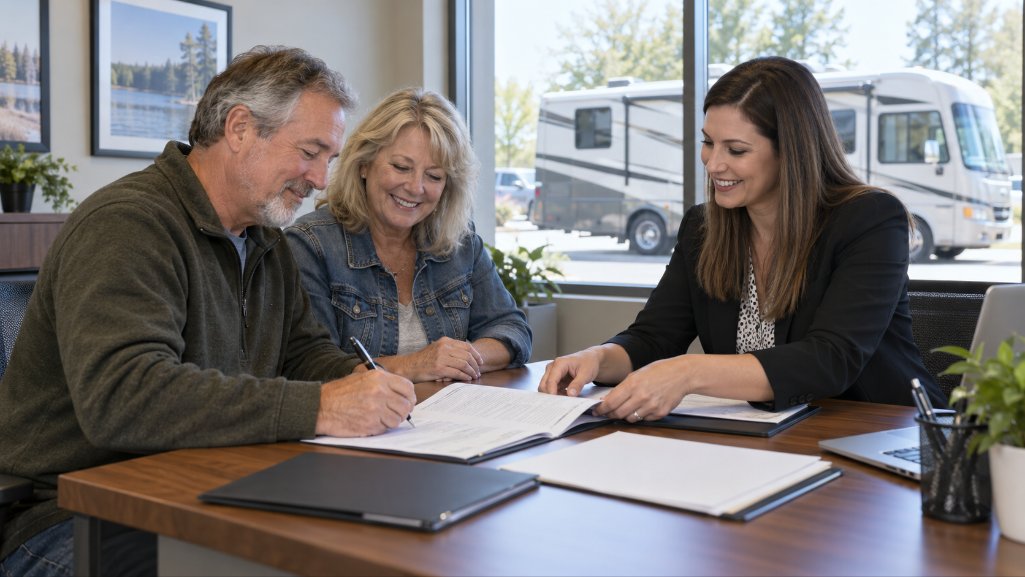
Private-sale loan funds do not always go into the buyer’s account. A lender may issue payment directly to the seller, the seller’s lienholder, or both.
If the RV has no existing lien, the lender may prepare payment payable to the titled owner. If a lien exists, the lender may first send the required payoff amount to the current lienholder. Any remaining proceeds may go to the seller.
Your down payment may also need to be documented. Ask the lender whether you should pay it directly to the seller or include it in the coordinated closing process.
Do not change the payment instructions without speaking with the lender. A seller asking for payment to an unrelated person, business, or account should receive additional scrutiny.
Complete the title transfer
The buyer, seller, existing lienholder, and new lender may each have responsibilities during the title transfer. Follow the lender’s instructions and current state requirements.
Before completing the transaction, confirm:
- Who will receive and hold the original title
- Which parties must sign the title
- How an existing lien will be released
- How the new lender’s lien will be recorded
- Who will submit the title transfer documents
- When the buyer can take possession of the RV
- Whether temporary registration or transportation documents are needed
Keep copies of the purchase agreement, inspection report, payment records, insurance documents, title documents, and lender correspondence.
Watch for private-sale warning signs
Pause the purchase if:
- The seller will not show you the title.
- The seller’s name does not match the title.
- The VIN is missing, damaged, or does not match the documents.
- The seller will not allow an independent inspection.
- The price is far below comparable RVs without a clear reason.
- The seller pressures you to pay before the lender reviews the transaction.
- The seller requests payment through gift cards, cryptocurrency, or an unrelated third party.
- The seller provides incomplete or conflicting lien information.
- You cannot inspect the RV in person before completing the purchase.
A legitimate seller should understand that financed purchases require documentation and coordination.
Estimate the complete cost before you buy
The purchase price and monthly loan payment are only part of the cost. Include insurance, registration, storage, fuel, campground expenses, maintenance, winterization, and repairs in your budget.
Use the PDCU RV loan calculator to compare estimated payments based on different loan amounts, rates, down payments, and terms. Calculator results are estimates and do not guarantee approval or final financing.
Ask about private party RV financing before making an offer
People Driven Credit Union offers financing for eligible new and used motorhomes, fifth wheels, travel trailers, and pop-up campers. Approval, available loan amounts, rates, and terms depend on the application and collateral review.
Before signing a private-sale agreement, contact PDCU to confirm the current requirements for the RV, title, seller, inspection, insurance, lien payoff, and payment process.
Private party RV loan FAQs
A lender may finance an eligible RV purchased from its owner. The lender will need to review the application, RV, purchase price, title, seller information, and any existing lien before approving and funding the transaction.
You may need a copy of the title, the RV’s VIN and vehicle details, seller information, a purchase agreement, lien payoff information, an inspection report, and proof of insurance. Ask your lender for its complete document list.
Compare the seller’s identification with the owner name on the title. Confirm that the VIN and RV description on the title match the vehicle. Every required owner should participate in the transfer.
The seller’s lender may need to receive the payoff before releasing its lien. Your lender may coordinate payment between the existing lienholder and seller. Do not pay the seller directly until your lender explains the process.
An inspection may not be required in every transaction, but it is a useful step. An independent RV inspection can identify mechanical, structural, electrical, plumbing, appliance, and water-damage concerns before you complete the purchase.
The lender may make payment to the seller, the seller’s lienholder, or both. The payment method depends on the title status, existing loan, and lender requirements.
Contact an insurance provider before the closing date. Your lender may require proof of active coverage and may need to be listed on the policy before loan funds are released.
You can negotiate a deposit with the seller, but understand the refund terms before paying it. A deposit could be at risk if the RV does not qualify for financing or fails your inspection.

John Scharff is the Digital Marketing Lead at People Driven Credit Union, where he helps create clear, practical financial content for members and the communities PDCU serves. He focuses on making financial topics easier to understand, from loans and savings accounts to digital banking, fraud prevention, and everyday money management.
View More Posts