Choosing between a new RV and a used one involves more than comparing the prices on the listings. Depreciation, warranty coverage, expected maintenance, available inventory, and financing terms can all affect which option fits your budget.
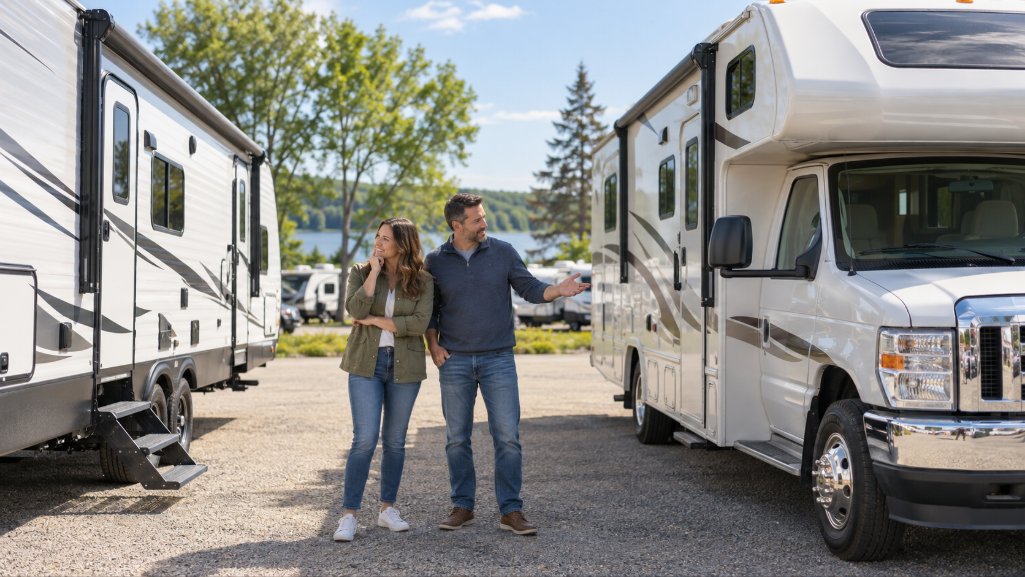
Used RV financing may help you purchase a motorhome, travel trailer, fifth wheel, or pop-up camper at a lower price than a comparable new model. A new RV, however, may offer updated features, manufacturer warranty coverage, and fewer immediate maintenance concerns.
Understanding the tradeoffs can help you decide which type of RV makes sense for your travel plans and finances.
New vs. used RVs at a glance
| Consideration | New RV | Used RV |
|---|---|---|
| Purchase price | Usually higher because you are buying a current or recent model | Often lower, depending on the RV’s age, condition, mileage, and features |
| Depreciation | May lose value more quickly during the first years of ownership | The original owner may have absorbed a larger portion of the early depreciation |
| Inventory | May offer current floor plans, technology, and customization options | May provide more variety across model years and price ranges |
| Warranty | May include manufacturer warranty coverage | Original coverage may be limited, expired, or transferable only under certain conditions |
| Maintenance | May require fewer immediate repairs, although new RVs can still have service needs | May need maintenance or repairs sooner, depending on its history and condition |
| Financing terms | Newer collateral may qualify for different financing options | Available terms may depend more heavily on the RV’s age, condition, and value |
| Available rates | May qualify for a lower available rate when other application factors are comparable | Older RVs may be subject to different available rates or financing limitations |
Begin with how you plan to use the RV
Before comparing new and used inventory, think about how often you expect to travel and which features you actually need. A family planning several long trips each year may prioritize sleeping capacity, storage, reliability, and a floor plan that works for extended stays. Someone planning occasional weekend trips may be comfortable with a smaller or older camper.
Consider the type of RV that fits your plans:
- Class A motorhome: A larger motorized RV with extensive living space and amenities.
- Class B motorhome: A compact camper van that may be easier to drive and store.
- Class C motorhome: A motorized RV commonly identified by its sleeping area above the cab.
- Travel trailer: A towable RV available in many sizes and floor plans.
- Fifth wheel: A larger towable RV that connects to a compatible pickup truck using a bed-mounted hitch.
- Pop-up camper: A lightweight, collapsible camper that may have a lower purchase price.
For a towable RV, confirm that your vehicle has the required towing capacity. The RV’s loaded weight, hitch setup, passengers, cargo, and other towing requirements should be considered before you buy.
Compare purchase prices and total costs
A used RV generally costs less than a comparable new model, but the purchase price is only part of the decision. Estimate what you may spend on insurance, registration, storage, fuel, campground reservations, routine maintenance, winterization, accessories, and repairs.
A lower purchase price may allow you to make a larger percentage down payment or borrow less. However, an older RV that needs tires, roof sealing, appliance repairs, or mechanical work could reduce some of the initial savings.
Use the PDCU RV loan calculator to compare estimated payments for different purchase prices, down payments, rates, and loan terms. Calculator results are estimates and do not guarantee approval or final financing terms.
Understand RV depreciation
Depreciation is the reduction in an RV’s market value over time. New RVs often experience a larger decline in value during the early years of ownership. That does not automatically make a new RV a poor choice, but it is important if you expect to sell or trade the RV within a few years.
Used RV buyers may avoid part of the initial depreciation because the previous owner purchased the RV when it was new. Depreciation continues, however, and an RV’s future value will depend on factors such as:
- Age and mileage
- Exterior and interior condition
- Maintenance history
- Water or structural damage
- Mechanical condition
- Floor plan and market demand
- Included equipment and upgrades
Research comparable listings and an appropriate RV valuation resource before agreeing to a purchase price. The asking price may not always match the value a lender assigns to the RV.
Compare available inventory
Shopping for a new RV may give you access to current floor plans, appliances, safety equipment, entertainment systems, and energy-efficient features. Depending on the manufacturer and dealership, you may also be able to choose certain colors, finishes, or optional equipment.
The used market may offer a broader selection of model years and prices. You may find a higher trim level or larger RV for less than a new entry-level model. The tradeoff is that finding the right combination of condition, features, location, and price can take more time.
When comparing listings, avoid focusing only on the model year. Two RVs of the same age can have very different values based on how they were stored, maintained, and used.
Review warranty coverage carefully
A new RV may include separate warranties for the RV itself, its chassis, appliances, and installed equipment. Review what each warranty covers, how long the coverage lasts, and where covered service can be completed.
Do not assume that every repair will be covered. Warranty exclusions, maintenance requirements, and service procedures can vary.
A used RV may have limited remaining warranty coverage or none at all. If a seller says that coverage transfers to a new owner, request the warranty documents and confirm the transfer requirements with the provider.
Plan for maintenance and inspections
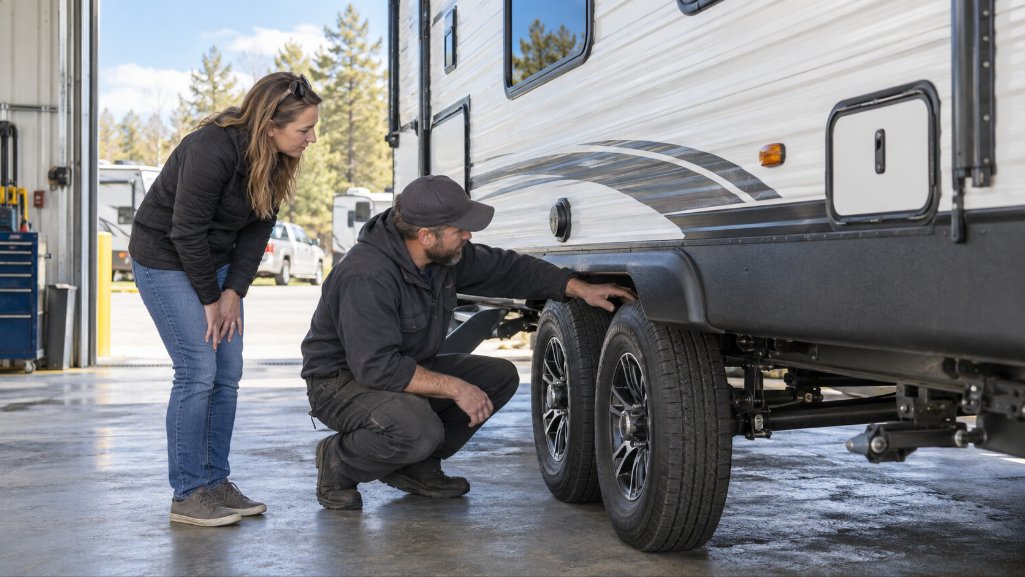
Every RV requires maintenance, including new models. Seals, roofs, tires, batteries, plumbing systems, appliances, generators, and mechanical components should be checked regularly.
Maintenance history is especially important when considering used RV financing. Ask the seller for service records and arrange an independent inspection before completing the purchase. For a motorhome, consider both an RV systems inspection and a mechanical inspection of the engine, transmission, brakes, and chassis.
A used-RV inspection should examine:
- Roof, window, door, and slide-out seals
- Signs of water intrusion, mold, or structural damage
- Tire age and condition
- Brakes, suspension, and wheel bearings
- Electrical, plumbing, heating, and cooling systems
- Refrigerator, stove, water heater, and other appliances
- Battery, generator, and propane systems
- Engine and drivetrain on a motorhome
- Title, vehicle identification number, and service records
An inspection cannot predict every future repair, but it can help you identify problems that may affect the price, safety, or financing decision.
How financing terms may differ
RV financing terms can depend on the borrower’s creditworthiness, the amount requested, the loan term, and the RV offered as collateral. The RV’s age, condition, and market value can be particularly important when financing a used model.
A lender may consider:
- The purchase price and estimated collateral value
- The amount of your down payment
- The requested loan amount
- The loan-to-value ratio
- The RV’s model year, mileage, and condition
- The length of the requested repayment term
- Your credit profile, income, and existing obligations
The loan-to-value ratio compares the amount financed with the RV’s value. If the purchase price is significantly higher than the lender’s assigned value, you may need to make a larger down payment or renegotiate the price.
How RV age can affect available rates
Older RVs may have different available rates or loan terms because age can affect the RV’s value, expected useful life, and resale market. Some older models may also receive additional review or have fewer financing options.
People Driven Credit Union publishes age-related information with its current RV financing options. Because rates and requirements are subject to change, review the current PDCU RV loan rates and age guidelines before choosing an RV.
A newer RV is not guaranteed to receive a particular rate, and an older RV is not automatically ineligible. Final rates, loan amounts, and terms are subject to the application, creditworthiness, requested financing, and collateral review.
Should you buy from a dealer or private seller?
Both new and used RVs may be available through dealerships. Used models may also be purchased directly from private sellers.
A dealership may offer several RVs to compare in one location and may assist with title and registration paperwork. A private seller may offer a competitive purchase price, but the buyer may have more responsibility for arranging financing, verifying ownership, inspecting the RV, and coordinating the transaction.
Before buying from a private seller:
- Verify the seller’s identity and ownership documents.
- Confirm that the vehicle identification number matches the title and RV.
- Ask whether there is an existing lien.
- Have the RV inspected independently.
- Do not rely only on photos or the seller’s description.
- Coordinate the payment and title process with your lender.
When a new RV may be the better fit
A new RV may make sense if you:
- Want the latest floor plan, technology, and safety features
- Place a high value on manufacturer warranty coverage
- Prefer an RV without a previous owner’s maintenance history
- Plan to keep the RV long enough that early depreciation is less important
- Want access to current-model inventory or customization options
When a used RV may be the better fit
Used RV financing may make sense if you:
- Want to reduce the purchase price or amount borrowed
- Prefer to avoid part of the depreciation associated with buying new
- Are comfortable reviewing maintenance records and arranging an inspection
- Can set aside money for repairs and replacement items
- Want to compare more model years and price ranges
Questions to ask before deciding
Use these questions to compare your options:
- How much can I comfortably spend each month on the loan and other RV costs?
- How long do I plan to own the RV?
- Which features are essential, and which are optional?
- How much depreciation am I comfortable accepting?
- Does the used RV have complete maintenance records?
- What warranty coverage is included or still available?
- What repairs or maintenance may be needed during the first year?
- How does the RV’s age affect available financing?
- Does the purchase price align with the RV’s market value?
- Would a larger down payment improve the proposed loan structure?
Compare financing before you shop
An RV loan pre-approval can help you establish a potential financing range before comparing new and used RVs. It may also help you keep the purchase-price discussion separate from dealership financing offers and optional products.
Pre-approval does not guarantee final approval. The selected RV must still meet applicable collateral requirements, and final financing can depend on your application, creditworthiness, requested amount, and the RV’s age, value, and condition.
Explore RV financing with People Driven Credit Union
People Driven Credit Union offers financing for eligible new and used motorhomes, travel trailers, fifth wheels, and pop-up campers. Available rates and terms depend on the application and the RV being financed.
Compare current PDCU RV loan rates
New and used RV financing FAQs
Neither option is automatically easier to finance. Available financing depends on your application, creditworthiness, requested loan amount, and the RV’s age, value, and condition.
They can be, particularly when an RV is older. The available rate may also depend on your credit profile, loan amount, term, down payment, and the RV’s collateral value.
Age requirements vary by lender and loan program. Older RVs may be subject to different rates, terms, or additional review. Check PDCU’s current RV rate table or speak with a loan specialist before committing to an older model.
A down payment may reduce the amount you need to finance and could help when the purchase price exceeds the lender’s assigned value. Whether a down payment is required depends on the application and proposed loan structure.
Financing may be available for an eligible private-seller purchase. The lender may need information about the RV, seller, title, purchase agreement, and any existing lien before completing the transaction.
An inspection may not be required in every transaction, but it is a valuable step. A qualified inspector can identify maintenance, mechanical, structural, and water-intrusion concerns that may affect the purchase decision.
It depends on the warranty. Ask for the original warranty documents and confirm transfer requirements directly with the manufacturer or warranty provider.
A used RV usually has a lower purchase price than a comparable new model, but ownership costs can vary. Include inspections, repairs, maintenance, insurance, storage, fuel, registration, and campground expenses in your comparison.

John Scharff is the Digital Marketing Lead at People Driven Credit Union, where he helps create clear, practical financial content for members and the communities PDCU serves. He focuses on making financial topics easier to understand, from loans and savings accounts to digital banking, fraud prevention, and everyday money management.
View More Posts