An RV loan calculator can help you estimate a monthly payment before you shop for a motorhome, travel trailer, fifth wheel, or camper. However, the loan payment is only one part of your RV budget.

You also need to account for insurance, registration, storage, fuel, campground reservations, maintenance, and repairs. These expenses can determine whether an RV remains affordable after you bring it home.
Use the PDCU RV loan calculator to compare estimated payments using different purchase prices, down payments, trade-in values, interest rates, and loan terms.
Calculator results are estimates based on the information you enter. They do not guarantee approval, a loan amount, a rate, a term, or a payment.
Start With a Comfortable Monthly Budget
Before looking at RV prices, decide how much room you have in your monthly budget. Review your income, regular expenses, savings goals, and current debt payments.
Your RV budget should leave room for:
- Household expenses
- Emergency savings
- Retirement contributions
- Existing loan and card payments
- Seasonal expenses
- Unexpected RV repairs
The amount you may qualify to borrow should not automatically become your spending limit. A lender evaluates whether you qualify for financing. You decide whether the payment and ownership costs fit your plans.
How to Use an RV Loan Calculator
An RV loan calculator estimates your payment based on the numbers you enter. Try several combinations instead of calculating only one scenario.
The PDCU calculator includes fields for the purchase price, rebate, trade-in value, amount owed on the trade-in, down payment, interest rate, and loan term.
1. Enter the RV Purchase Price
Start with the negotiated purchase price of the RV. If you have not chosen one yet, test several prices to understand how much each increase would affect the payment.
Use the actual purchase price rather than the monthly payment quoted by a dealership. This helps you compare RVs and financing offers on the same basis.
2. Add Your Down Payment
A down payment reduces the amount you need to finance. A larger down payment may lower your estimated monthly payment and reduce the total interest paid over the loan term.
Do not empty your savings to make the largest possible down payment. Keep money available for registration, insurance, equipment, maintenance, and unexpected repairs.
A down payment may be required depending on your application, the requested loan, and the RV’s age, value, and condition.
3. Enter Any Available Rebate
If the RV qualifies for a verified manufacturer or dealership rebate, include it when estimating the amount financed. Read the offer carefully because some rebates may depend on the model, purchase date, or financing arrangement.
Do not include a rebate until you confirm that your purchase qualifies.
4. Calculate Your Trade-In Equity
If you are trading in another RV, enter both its trade-in value and the amount you still owe.
Your estimated equity is the trade-in value minus the outstanding loan balance.
For example, if a dealer offers $25,000 for your current RV and you owe $18,000, you have approximately $7,000 in positive equity. That amount may reduce what you need to finance.
If you owe more than the RV is worth, you have negative equity. Adding that balance to a new loan increases the amount financed and can make the next RV harder to afford.
5. Enter an Estimated Interest Rate
The interest rate affects both the monthly payment and the total interest paid. Your available rate may depend on your application, creditworthiness, loan amount, loan term, and the RV’s age, type, value, and condition.
Use a realistic rate when testing the calculator. Review the current PDCU RV loan rates, but remember that advertised rates may not represent the rate available for every applicant or RV.
6. Compare Several Loan Terms
The loan term is the amount of time you have to repay the loan. A longer term usually reduces the required monthly payment, but it generally increases the total interest paid.
Compare at least three term options. Look at:
- The estimated monthly payment
- The total interest over the loan term
- How long you expect to keep the RV
- How quickly the RV may lose value
- Whether the payment leaves room for ownership expenses
A low monthly payment can look attractive until you notice how long the loan lasts. The calculator is most useful when you compare the payment and total interest together.
Estimate the Full Cost of RV Ownership
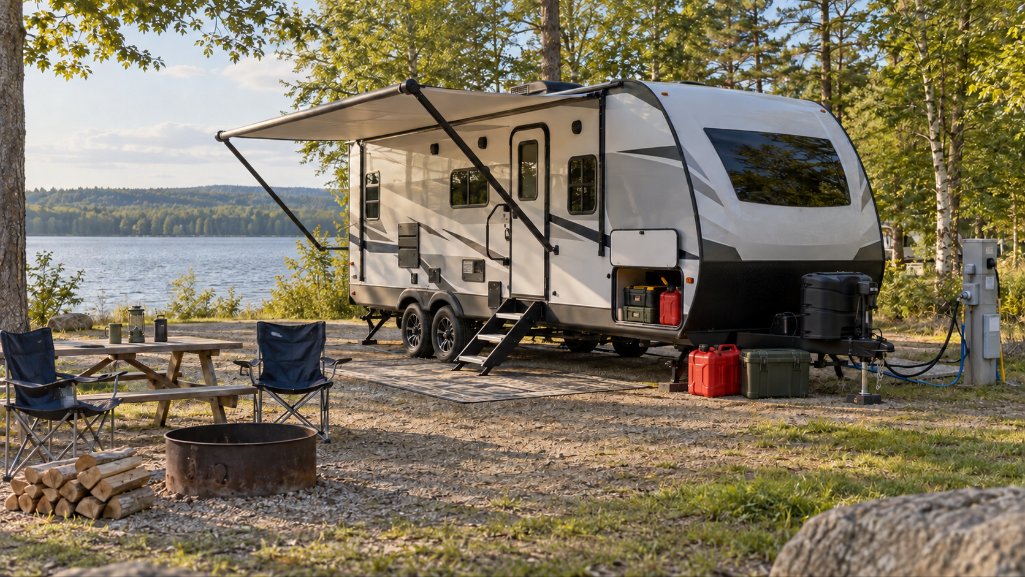
The calculator estimates financing. It cannot predict every expense connected with owning and using an RV.
Create a separate ownership budget before deciding how much RV you can afford.
RV Insurance
Insurance costs can vary based on the RV type, value, age, use, storage location, coverage, and driver information. A motorhome may need different coverage than a towable travel trailer or pop-up camper.
Request insurance quotes for the RVs you are considering. Do this before buying, especially if you are comparing a motorhome with a trailer.
Registration
Include the cost of registering and titling the RV in Michigan. The amount and process can depend on the vehicle type and purchase.
Contact the Michigan Secretary of State or ask the dealership what may apply to your transaction. Keep these costs separate from your down payment when planning how much cash you will need.
Storage
If you cannot keep the RV at home, research local storage before buying. Prices can vary based on location, RV length, security, access, and whether the space is indoor, covered, or outdoors.
Also check local ordinances, homeowners association rules, driveway space, and clearance before assuming you can store the RV at home.
Fuel
Fuel expenses depend on how often you travel, how far you drive, the RV’s fuel economy, and current fuel prices.
For a towable RV, consider the tow vehicle’s fuel use while pulling the trailer. Towing can reduce fuel economy compared with everyday driving.
Build a simple trip estimate:
- Estimate the round-trip mileage.
- Estimate the motorhome or tow vehicle’s fuel economy.
- Divide the mileage by the estimated miles per gallon.
- Multiply the result by the expected fuel price.
Repeat the estimate for several trips you expect to take each year.
Campground Costs
Campground prices can vary based on location, season, amenities, RV size, and the type of site. A basic campsite may cost less than a site with electric, water, sewer, or resort-style amenities.
Estimate how many nights you expect to camp each year. Include reservation deposits, cancellation policies, and higher prices during popular travel periods.
Maintenance
Routine maintenance helps protect the RV and may reduce the chance of larger repairs. Your budget may need to cover:
- Roof and seal inspections
- Tire replacement
- Brake and wheel-bearing service
- Battery care
- Generator service
- Heating and cooling maintenance
- Plumbing system care
- Winterization and spring preparation
- Engine and drivetrain service for a motorhome
Maintenance needs vary by RV type, age, condition, mileage, and use. Review the manufacturer’s recommended schedule for the RV you are considering.
Repairs
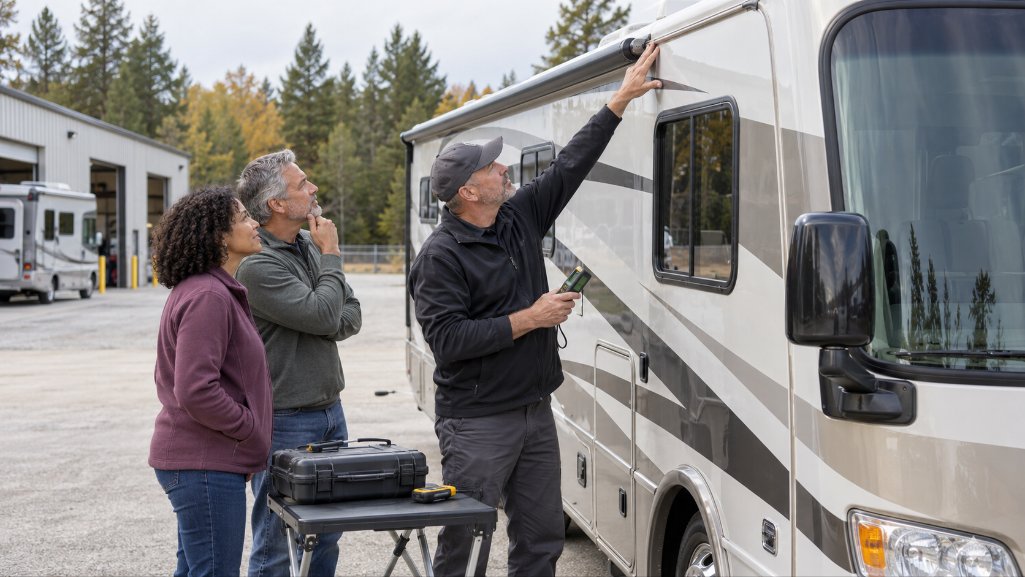
Even a well-maintained RV may need repairs. Water intrusion, roof damage, worn tires, appliance failures, electrical problems, plumbing leaks, and mechanical problems can be expensive.
Older RVs may require a larger repair reserve. Consider keeping dedicated savings available instead of relying on the monthly budget to absorb a major repair.
If you are buying used, arrange an inspection before completing the purchase. An inspection can identify problems that change the RV’s value and your ownership budget.
Do Not Forget the Tow Vehicle
A travel trailer, fifth wheel, or pop-up camper requires a compatible tow vehicle. Check the vehicle manufacturer’s towing limits and the RV’s loaded weight, not only its empty weight.
Your budget may also need to include:
- A trailer hitch or fifth-wheel hitch
- Weight-distribution equipment
- A brake controller
- Towing mirrors
- Truck or vehicle modifications
- Maintenance related to towing
If your current vehicle cannot safely tow the RV, include the cost of another vehicle in your decision. A reasonably priced trailer stops being affordable if it also requires an unplanned truck purchase.
Test More Than One RV Loan Scenario
Use the RV loan calculator to test several possibilities before shopping.
Scenario 1: Lower Purchase Price
Reduce the RV price while keeping the down payment, interest rate, and term the same. This shows how choosing a less expensive RV could affect the payment.
Scenario 2: Larger Down Payment
Keep the purchase price the same and increase the down payment. Compare the new monthly payment and total interest with your original estimate.
Scenario 3: Shorter Loan Term
Choose a shorter term while keeping the other numbers unchanged. The payment may increase, but the estimated total interest may decrease.
Scenario 4: Different Interest Rate
Test more than one interest rate. This helps you see how the available rate could affect affordability before you commit to a particular RV.
Scenario 5: No Trade-In
Run the calculation without your expected trade-in value. Dealer offers can vary, so this scenario shows whether the RV still fits your budget if the trade-in is worth less than expected.
Signs an RV May Be Outside Your Budget
Consider choosing a different RV or delaying the purchase if:
- The payment leaves little room for insurance or storage
- You would need to use all your emergency savings
- You are relying on an unconfirmed trade-in value or rebate
- You need an unusually long term to make the payment work
- You cannot set aside money for maintenance and repairs
- The RV requires a different tow vehicle you have not budgeted for
- A modest increase in fuel or campground costs would create a problem
Stepping down in price may leave more money available to use and maintain the RV. An affordable RV is one you can enjoy without ignoring the expenses that come after the purchase.
Consider RV Loan Pre-Approval
After estimating a comfortable budget, consider requesting RV loan pre-approval.
Pre-approval can provide a potential financing range before you visit a dealership or contact a private seller. It can also help you focus on the purchase price before comparing financing offers.
Pre-approval does not guarantee final approval. Your available loan amount, rate, term, and down-payment requirement may depend on your application, creditworthiness, requested amount, and the RV’s age, value, and condition.
Estimate Your RV Payment With PDCU
People Driven Credit Union offers financing for eligible new and used motorhomes, fifth wheels, travel trailers, and pop-up campers.
You can apply before becoming a PDCU member. If the loan is approved, you must establish membership before the loan funds are disbursed.
Calculate an Estimated RV Loan Payment
Enter the purchase price, down payment, trade-in information, interest rate, and term to compare potential RV loan payments. Then add insurance, storage, fuel, maintenance, campground costs, and repairs to your complete budget.
RV Loan Calculator FAQs
An RV loan calculator estimates the monthly payment and total interest based on the purchase price, down payment, trade-in information, interest rate, and loan term you enter.
No. Calculator results are estimates and do not guarantee approval, a loan amount, a rate, a term, or a payment. Your actual financing depends on the lender’s review of your application and the RV.
A down payment reduces the amount financed. It may lower the monthly payment and reduce the total interest paid over the loan term.
Enter the RV’s estimated trade-in value and the amount you still owe. The difference indicates whether you have positive or negative equity in the trade-in.
A longer term will generally lower the required monthly payment when the other loan details remain the same. However, it usually increases the total interest paid and keeps you in debt longer.
An RV loan calculator may not include insurance, registration, storage, fuel, campground reservations, routine maintenance, repairs, towing equipment, or accessories. Add these expenses to your ownership budget.
The appropriate amount depends on the RV’s age, type, condition, mileage, and maintenance history. Older RVs and motorhomes with more mechanical systems may require a larger repair reserve.
Yes. Enter several possible purchase prices to compare estimated payments and establish a shopping budget before visiting a dealership or contacting a private seller.

John Scharff is the Digital Marketing Lead at People Driven Credit Union, where he helps create clear, practical financial content for members and the communities PDCU serves. He focuses on making financial topics easier to understand, from loans and savings accounts to digital banking, fraud prevention, and everyday money management.
View More Posts