An ATV loan calculator can help you estimate how the purchase price, down payment, trade-in value, APR*, and loan term may affect your monthly payment. The payment is only part of the answer, though. Insurance, title and permit costs, protective gear, a trailer, maintenance, and fuel also belong in your ATV budget.
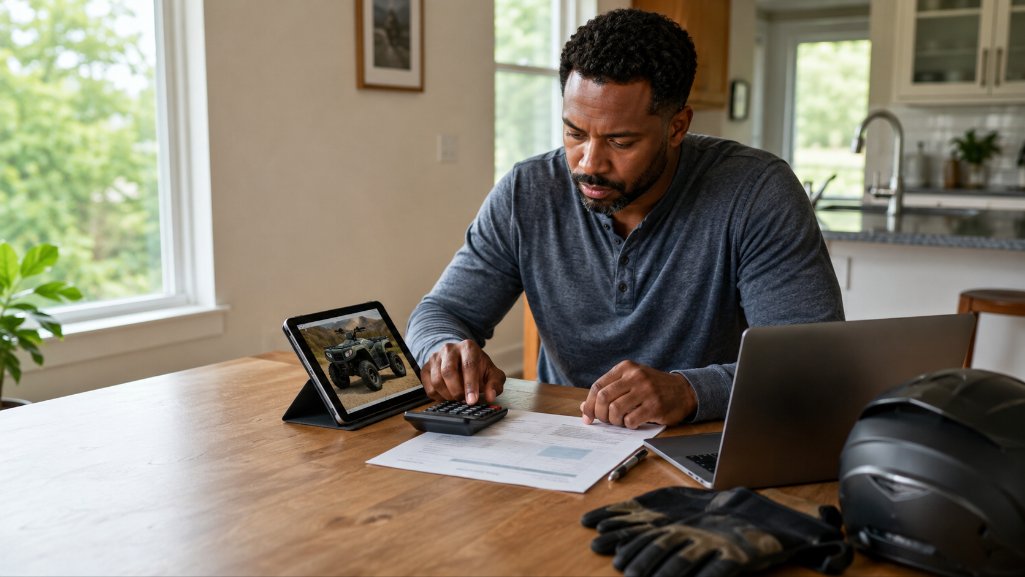
Before you shop, calculate both numbers: the estimated loan payment and the full cost of owning the ATV. That gives you a more useful answer to the question, “How much ATV can I afford?”
Use the PDCU ATV Loan Calculator
Start With Your Monthly ATV Budget
Begin with the amount your household can comfortably spend each month without cutting into required expenses, emergency savings, or other financial goals.
Your monthly ATV budget may include:
- The estimated ATV loan payment
- Insurance
- Fuel
- Routine maintenance
- Repair savings
- Trailer ownership or rental
- Storage, if needed
- Annual ORV license and trail permit costs, when required
Do not treat the largest payment you can technically make as the amount you should spend. ATVs need tires, batteries, fluids, service, transportation, and riding equipment. A payment that leaves nothing for those costs is not an affordable payment.
How to Use the PDCU ATV Loan Calculator
The calculator on the People Driven Credit Union ATV Loans page lets you enter details about the purchase and financing. You can adjust the numbers and compare several scenarios before applying.
Enter or review the following:
- Purchase price
- Any applicable rebate
- Trade-in value
- Amount still owed on the trade-in
- Down payment
- Estimated annual interest rate
- Loan term in months
The calculator estimates the monthly payment, loan amount, total interest, and total amount paid based on the information you enter. Results are for planning only. They do not guarantee approval, a particular loan amount, rate, term, or payment.
Calculate an estimated ATV loan payment.
1. ATV Purchase Price
The purchase price creates the starting point for your calculation. Compare the complete price of each machine, not only the monthly payment offered by a seller.
Ask whether the quoted price includes accessories or equipment such as:
- A winch
- Plow equipment
- Storage boxes
- Windshields or roofs
- Upgraded tires or wheels
- Lighting
- Passenger seating
Optional equipment can increase the amount financed. Decide which items you need now, which can wait, and which are already included with another ATV you are considering.
2. Down Payment
A down payment reduces the amount you need to finance. A larger down payment may lower your estimated monthly payment and total interest. A down payment may also be required depending on the application, ATV value, age, and loan structure.
Do not use every available dollar for the down payment. Keep enough money for protective equipment, transportation, initial maintenance, and unexpected repairs. Your emergency savings should remain available for emergencies, not become part of the ATV by accident.
3. Trade-In Value and Amount Owed
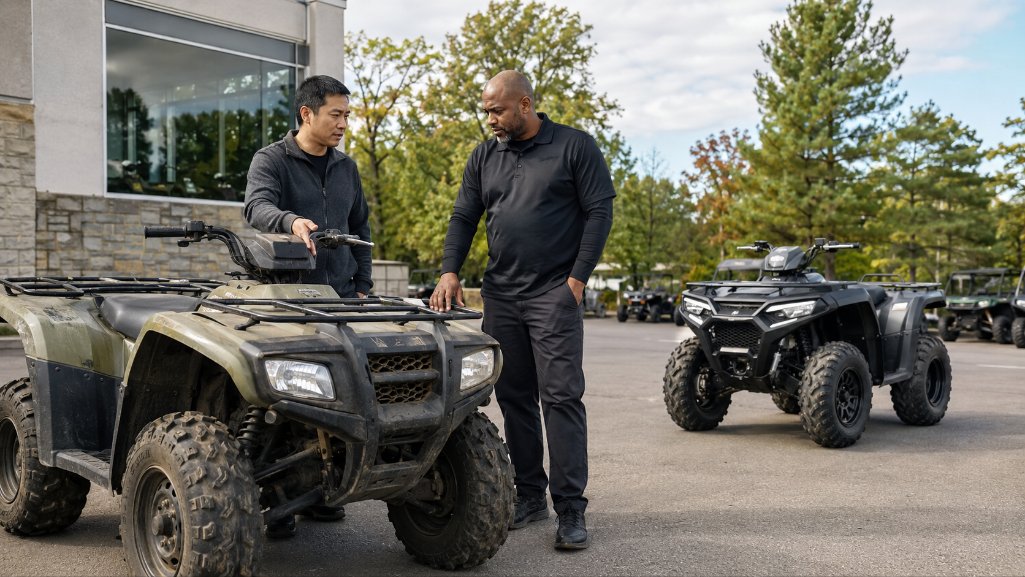
A trade-in can reduce the amount you need to finance, but only the available equity counts toward the purchase.
Use this basic calculation:
Trade-in equity = trade-in value minus the amount still owed
For example, if a dealer offers $3,000 for your current ATV and you still owe $1,200, you have $1,800 in trade-in equity. Enter both the trade-in value and the amount owed in the calculator so it can estimate the financed amount correctly.
If you owe more than the ATV is worth, you have negative equity. Adding that balance to a new loan can increase the amount financed and may affect approval. Review the complete transaction with PDCU before agreeing to the purchase.
4. APR*
APR stands for Annual Percentage Rate. It is one of the main inputs used to estimate your payment and total interest.
For planning, review the current PDCU ATV loan rates. The actual APR* available to you may depend on factors such as creditworthiness, the amount borrowed, loan term, and the ATV’s type, value, age, and condition.
Run the calculator with more than one rate. This shows how a different APR* could change the payment and total borrowing cost. Do not build a budget that works only at the lowest advertised rate.
5. ATV Loan Term
The loan term is the number of months you have to repay the loan. A longer term can lower the monthly payment, but it generally increases the total interest paid. A shorter term generally creates a higher payment and lower total interest.
Compare at least two or three terms in the ATV loan calculator. Look at both the monthly payment and the total amount paid. The lowest payment is not automatically the most affordable choice over time.
Vehicle age, loan amount, collateral value, and other application details may affect the terms available. The calculator may allow you to test a term that is not available for the ATV you select.
6. ATV Insurance
Insurance costs vary based on the ATV, coverage, location, how the machine will be used, and the people who will operate it. Ask an insurance provider for an estimate before purchasing the ATV.
When comparing coverage, ask about:
- Liability coverage
- Collision coverage
- Comprehensive coverage for theft, fire, weather, or other covered losses
- Coverage for accessories and modifications
- Coverage while transporting the ATV
- Deductibles and policy limits
Insurance is not included in the calculator’s estimated loan payment. Add the quoted premium to your monthly or annual ownership budget separately.
7. Michigan Title, ORV License, and Trail Permit Costs
Michigan generally titles off-road vehicles rather than registering them through the Secretary of State. Michigan residents must generally apply for an ORV certificate of title after purchasing or transferring an ATV.
You may also need a Michigan Department of Natural Resources ORV license or trail permit depending on where you ride. Requirements differ for private land, eligible roads, state-designated trails, routes, and scramble areas.
Check current Michigan ORV license and trail permit requirements before finalizing your budget. These costs are separate from the ATV loan calculator estimate.
8. Protective Riding Gear
Protective equipment should be part of the purchase budget, not something you plan to buy later if money remains. Depending on the machine and riding conditions, your equipment may include:
- A properly fitted helmet
- Eye protection or goggles
- Gloves
- Over-the-ankle boots
- Long sleeves and durable pants
- Protective body equipment
- Weather-appropriate riding clothing
Include equipment for every regular rider, not only the person financing the ATV. Replace damaged or worn safety equipment when needed.
9. A Trailer and Transportation Equipment
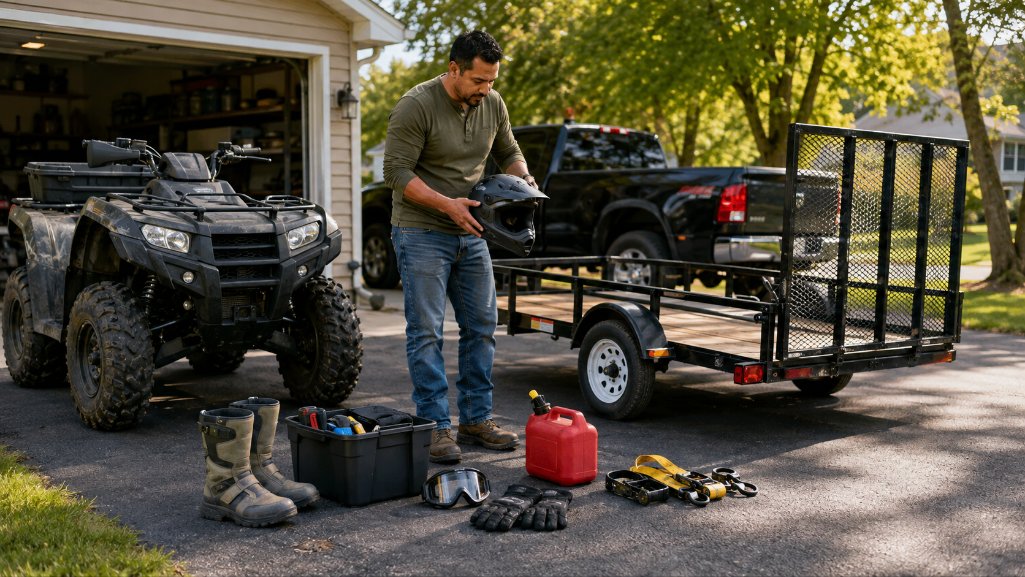
If you cannot legally or safely ride from your property to the trail, you will need a way to transport the ATV. Your budget may need to include:
- A utility or ATV trailer
- A compatible hitch and wiring
- Properly rated tie-down straps
- Wheel chocks or other securement equipment
- Trailer tires, bearings, lights, and maintenance
- Trailer storage
Confirm that your tow vehicle, hitch, trailer, and securement equipment can safely handle the total loaded weight. If you plan to rent a trailer, estimate how often you will ride and include the recurring rental cost.
10. ATV Maintenance and Repairs
Maintenance costs depend on the ATV, how often it is used, and the conditions in which you ride. Mud, water, sand, heavy towing, and long trail rides can increase wear.
Plan for items such as:
- Oil and filter changes
- Air filters
- Fluids and lubrication
- Tires
- Brakes
- Batteries
- Belts, chains, or drivetrain service
- Suspension and steering repairs
- Seasonal preparation and storage
Ask for the recommended service schedule before buying. For a used ATV, request maintenance records and consider an inspection by an experienced mechanic.
11. Fuel
Fuel use depends on the engine, terrain, load, riding style, and number of hours you ride. Estimate how often you expect to use the ATV and include fuel for both the machine and the vehicle towing it.
If the ATV requires a specific fuel grade, use that price in your estimate. Fuel may look like a small cost next to the purchase price, but frequent riding can make it a meaningful part of the monthly budget.
A Simple ATV Affordability Formula
Use this framework before choosing a purchase price:
Affordable monthly ATV budget = estimated loan payment + insurance + fuel + maintenance savings + trailer costs + permits and other recurring ownership costs
Then account for upfront costs:
Upfront ATV budget = down payment + title costs + protective gear + trailer or transportation equipment + initial maintenance
If the combined numbers are higher than your available budget, test a lower purchase price, larger down payment, different term, or less expensive machine. Do not solve every affordability problem by extending the loan term.
Compare More Than One ATV Loan Calculator Scenario
Run several estimates before applying:
- Your preferred ATV with the down payment you expect to make
- A less expensive new or used ATV
- A larger down payment
- A shorter loan term
- A different estimated APR*
- A purchase with and without a trade-in
Save the monthly payment, total interest, and total amount paid for each scenario. Then add the ownership costs the calculator does not include. That comparison gives you a much clearer affordability range.
Calculate Your ATV Payment With PDCU
The PDCU ATV loan calculator can help you compare purchase prices, down payments, trade-in information, rates, and loan terms before you shop or apply. Calculator results are estimates and do not guarantee financing or final loan terms.
Once you have a comfortable budget, you can apply for an ATV loan.
Frequently Asked Questions About ATV Affordability
An ATV loan calculator estimates figures such as the loan amount, monthly payment, total interest, and total amount paid based on the information you enter. Results are for planning and do not guarantee approval or final terms.
The calculator may not include insurance, protective gear, a trailer, fuel, maintenance, repairs, storage, title costs, or required ORV licenses and trail permits. Add these costs separately when deciding what you can afford.
A down payment reduces the amount financed. It may lower the estimated monthly payment and total interest, although final loan requirements depend on the completed application and selected ATV.
Enter the ATV’s trade-in value and the amount you still owe. The difference represents your available trade-in equity. If you owe more than the ATV is worth, contact PDCU to review how that may affect the transaction.
A longer term can lower the estimated monthly payment, but it generally increases total interest. Compare both the payment and total amount paid before choosing a term.
Yes. Ask an insurance provider for an estimate before purchasing the ATV. Insurance is separate from the loan payment and can vary based on the machine, coverage, location, and use.
You may need a trailer if you cannot ride directly from your property to an approved riding area. Include the trailer, hitch, tie-down equipment, maintenance, and storage or rental costs in your budget.
Michigan generally titles ORVs rather than registering them through the Secretary of State. Depending on where you ride, a Michigan DNR ORV license and trail permit may also be required.
*APR = Annual Percentage Rate. The actual APR and loan term are subject to approval and may be determined by the borrower’s creditworthiness, amount borrowed, and the type, value, age, and condition of the collateral. Rates are subject to change.

John Scharff is the Digital Marketing Lead at People Driven Credit Union, where he helps create clear, practical financial content for members and the communities PDCU serves. He focuses on making financial topics easier to understand, from loans and savings accounts to digital banking, fraud prevention, and everyday money management.
View More Posts