Pontoon boat financing can help you spread the purchase price of a new or used pontoon over a set loan term. Before you apply, look beyond the boat’s advertised price. Your budget may also need room for a trailer, insurance, registration, storage, fuel, maintenance, winterization, and equipment.
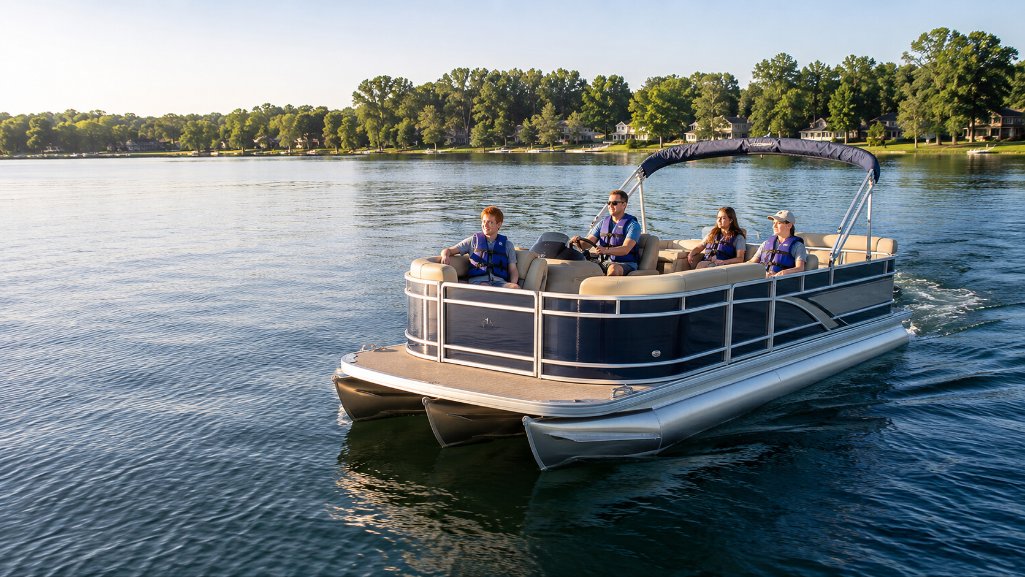
Michigan gives pontoon owners plenty of places to get on the water, from inland lakes to protected areas along the Great Lakes. The right boat and loan depend on where you plan to cruise, how many people you expect to carry, and what you can comfortably afford throughout the year.
1. Set Your Complete Pontoon Boat Budget
Start with the amount you can comfortably devote to boating. Your loan payment matters, but it is only one part of the cost of ownership.
Your budget may include:
- The pontoon’s purchase price
- A down payment
- Sales tax, title, and registration expenses
- A trailer and trailer registration
- Boat insurance
- Marina, dock, lift, or storage costs
- Fuel
- Routine maintenance and repairs
- Winterization, shrink-wrapping, and spring preparation
- Required safety equipment and optional accessories
Use the PDCU boat loan calculator to compare estimated payments using different purchase prices, down payments, interest rates, and loan terms. Calculator results are estimates and do not guarantee approval or final loan terms.
To learn more, read Boat Loan Calculator: How Much Boat Can You Afford?
2. Decide Between a New and Used Pontoon
A new pontoon may include updated features, a manufacturer’s warranty, and fewer immediate maintenance concerns. It will usually have a higher purchase price and may lose value faster during the first years of ownership.
A used pontoon may lower your starting price, but condition matters. Upholstery, flooring, pontoons, electrical components, the outboard motor, and the trailer can all affect the boat’s value and your future repair costs. An older watercraft may also qualify for different rates or terms than a newer model.
Compare the complete cost of each option. A less expensive used pontoon is not automatically the better value if it needs major engine, deck, or trailer work soon after purchase.
For more information about deciding between a new or used boat, read New vs. Used Boat Financing: Which Is Right for You?
3. Understand How the Loan Term Affects Your Cost
Your loan term is the number of months you have to repay the loan. A longer term may lower the required monthly payment, but it can increase the total interest paid. A shorter term usually creates a higher payment and may reduce the total interest cost.
People Driven Credit Union offers boat loan terms based on factors that include the amount financed, your application, and the watercraft’s age and value. Review PDCU’s current boat loan rates and terms before comparing offers.
Compare these figures for each financing option:
- Amount financed
- Annual Percentage Rate, or APR
- Loan term
- Estimated monthly payment
- Total estimated interest
- Total amount repaid
Do not choose a loan based only on the monthly payment. A smaller payment can hide a longer repayment period and a higher total borrowing cost.
4. Account for the Trailer
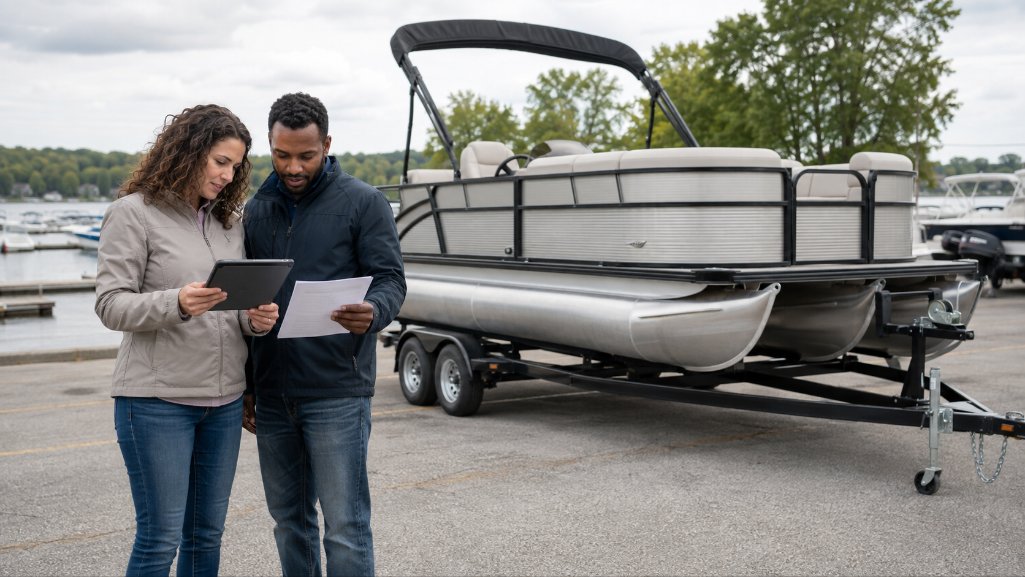
A trailer gives you more flexibility to visit different lakes and store the pontoon away from the water. It also adds costs and paperwork.
Before buying, confirm whether the advertised price includes the trailer. Ask People Driven Credit Union how the boat and trailer should be listed on the purchase agreement and whether both can be considered in your specific loan request. The answer may depend on how they are titled, valued, and sold.
Inspect a used trailer for rust, frame damage, tire condition, wheel-bearing problems, working lights, and properly operating brakes when equipped. Make sure your tow vehicle has the capacity to handle the combined weight of the pontoon, motor, trailer, fuel, and equipment.
5. Plan for Michigan Storage and Winterization
Michigan’s boating season makes off-season planning part of the ownership budget. You may store your pontoon on your property, at a marina, or in an indoor or outdoor storage facility. Each choice has different costs and access requirements.
Winter preparation may include:
- Engine winterization
- Fuel-system preparation
- Battery removal or maintenance
- Cleaning and drying the interior
- Protecting upholstery and electronics
- Using a fitted cover or shrink-wrap
- Storing the boat and trailer securely
Get storage and winterization estimates before choosing a pontoon. These seasonal costs can be substantial, and they are easier to manage when they are already part of your annual plan.
6. Get Boat Insurance Quotes Before You Buy
Request insurance quotes for the specific pontoons you are considering. The premium may depend on the boat’s value, size, horsepower, age, equipment, storage location, navigation area, and your selected coverage.
Ask the insurer what the policy covers for the boat, motor, trailer, personal property, liability, towing, and damage that occurs during storage. Also confirm your lender’s insurance requirements before closing the loan. Coverage terms and lender requirements can vary.
7. Inspect the Pontoon and Motor
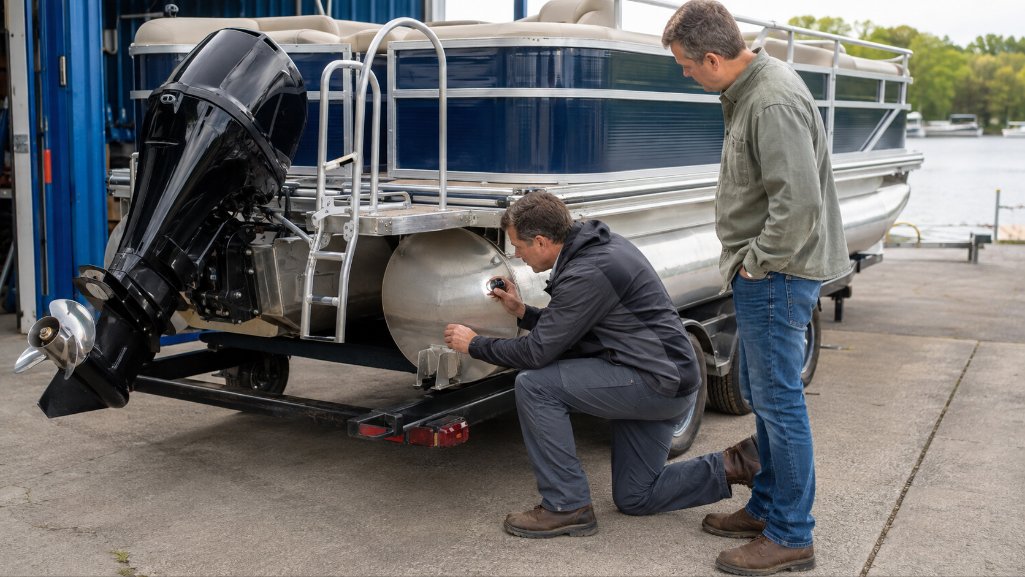
A careful inspection is especially important when buying a used pontoon. Cosmetic wear is easy to see. Problems with the pontoons, structure, motor, wiring, steering, or fuel system may require a closer look.
Check or have a qualified marine professional inspect:
- The pontoons for dents, cracks, corrosion, leaks, and previous repairs
- The deck, fencing, gates, rails, seats, and flooring
- The outboard motor, service records, hours, fluids, and controls
- The steering, throttle, gauges, lights, battery, and electrical system
- The propeller and lower unit
- The capacity plate and hull identification number
- The trailer, if included
When possible, arrange an on-water test. Confirm who will pay for the inspection and whether the purchase depends on acceptable inspection results before signing an agreement or providing money to the seller.
8. Compare Pontoons Based on How You Will Use Them
A fishing setup, family cruiser, and performance pontoon can have very different prices, engines, capacities, and operating costs. Decide which features you will use often and which ones simply raise the purchase price.
Consider:
- Passenger and weight capacity
- Two-tube or three-tube construction
- Motor size and expected fuel use
- Fishing, watersports, or cruising features
- Overall length and storage requirements
- Accessibility and boarding needs
- Electronics, covers, seating, and other equipment
Choose the pontoon that fits your regular use. Paying for unused capacity or equipment can leave less room in your budget for insurance, storage, maintenance, and days on the water.
9. Get Pre-approved Before Shopping
Loan pre-approval can give you a clearer shopping range before you visit a dealership or contact a seller. It can also help you compare boats by purchase price instead of allowing the discussion to focus only on a monthly payment.
You do not need to be a current People Driven Credit Union member to apply for a boat loan. If PDCU approves your loan, you must complete membership before the loan funds are disbursed. Membership eligibility and loan approval requirements apply.
After you submit an application, a People Driven Credit Union loan specialist will contact you. Final approval and available terms may depend on your completed application and the type, age, value, and condition of the pontoon offered as collateral.
To learn more about getting pre-approve for a boat loan, read Boat Loan Pre-approval: What It Is and Why It Helps.
Ready to Explore Financing a Pontoon Boat?
Estimate your payment, review current rates, or apply before you choose a specific pontoon. A PDCU loan specialist can explain what information may be needed for your loan request.
Explore Pontoon Boat Financing
Loan approval is subject to application, creditworthiness, membership eligibility, and collateral considerations. Available loan amounts, rates, and terms may vary. Rates are subject to change.
Frequently Asked Questions
People Driven Credit Union offers financing for eligible new and used boats. Available rates, loan amounts, and terms may depend on your application and the pontoon’s age, value, and condition.
Available terms depend on factors that include the loan amount, your application, and the boat’s age and value. Review PDCU’s current boat loan rate table or contact a loan specialist to discuss your specific purchase.
Ask PDCU how the trailer may be handled before agreeing to the purchase. The answer may depend on whether the trailer is included in the sale and how the boat and trailer are titled, documented, and valued.
Yes. A professional marine inspection and an on-water test can help you evaluate the pontoons, deck, motor, electrical system, controls, and included equipment before completing the purchase. To learn more, read Buying a Used Boat: Financial and Inspection Checklist.
Insurance and storage are ongoing ownership expenses that you should include in your budget. Do not assume they are part of the financed purchase price. Ask PDCU what costs may be included in your particular loan request.
Yes. PDCU allows prospective borrowers to apply before choosing a specific boat. Pre-approval does not guarantee final approval or financing for a particular pontoon. For more information on getting pre-approved for a pontoon boat in Michigan, read Boat Loan Pre-approval: What It Is and Why It Helps.

John Scharff is the Digital Marketing Lead at People Driven Credit Union, where he helps create clear, practical financial content for members and the communities PDCU serves. He focuses on making financial topics easier to understand, from loans and savings accounts to digital banking, fraud prevention, and everyday money management.
View More Posts